

Hercules and the King of Portugal: Icons of Masculinity and Nation in Calderón’s Spain
(University of Nebraska Press, 2019)
By Dian Fox

(University of Nebraska Press, 2019)
By Dian Fox
Hercules and the King of Portugal investigates how representations of masculinity figure in the fashioning of Spanish national identity, scrutinizing ways that gender performances of two early modern male icons—Hercules and King Sebastian—are structured to express enduring nationhood. The classical hero Hercules features prominently in Hispanic foundational fictions and became intimately associated with the Hapsburg monarchy in the early sixteenth century. King Sebastian of Portugal (1554–78), both during his lifetime and after his violent death, has been inserted into his own land’s charter myth, even as competing interests have adapted his narratives to promote Spanish power.
The hybrid oral and written genre of poetic Spanish theater, as purveyor and shaper of myth, was well situated to stage and resolve dilemmas relating both to lineage determined by birth and performance of masculinity, in ways that would ideally uphold hierarchy. Dian Fox’s ideological analysis exposes how the two icons are subject to political manipulations in seventeenth-century Spanish theater and other media. Fox finds that officially sanctioned and sometimes popularly produced narratives are undercut by dynamic social and gendered processes: “Hercules” and “Sebastian” slip outside normative discourses and spaces to enact nonnormative behaviors and unreproductive masculinities.

Abortion Regret: The New Attack on Reproductive Freedom
(Praeger, 2019)
By J. Shoshanna Ehrlich and Alesha E. Doan

(Praeger, 2019)
By J. Shoshanna Ehrlich and Alesha E. Doan
An indispensable resource for students, scholars, and activists concerned about current attacks on abortion rights, this book offers an unmatched account of the emergence, consolidation, and consequences of the antiabortion movement's paternalistic abortion regret narrative.
• Examines the historical continuity of the abortion regret narrative as a political strategy used to limit women's access to abortion
• Asserts that the abortion regret narrative is intimately tied to a gendered and paternalistic construction of women's divine role as mothers
• Examines the antiabortion movement's strategy to place the "grieving" mother at the center of its oppositional narrative
• Uses interviews, textual analysis of primary sources, and content analysis of state antiabortion policies to trace the growing impact of the abortion regret narrative
• Examines and reveals the antiabortion movement's calculated political motivation for using the abortion regret narrative as its primary strategy to oppose abortion rights

Women and Jews in the Sachsenspiegel Picture-Books
(Brepols Publisher, 2019)
By M. H. Caviness and C. G. Nelson

(Brepols Publisher, 2019)
By M. H. Caviness and C. G. Nelson
A Germanist and an art historian examine the pictures and text in the four densely illustrated manuscripts of the Sachsenspiegel that were produced in the century following its composition by Eike von Repgow. This is the first extensive study of these famous picture books in English. Using critical frameworks based on performative and feminist theory, the authors give detailed consideration to the social differences reshaped and maintained by text and image. Although Eike’s project, realized in the early 1220s, was concerned with peaceful interaction between diverse groups, including Slavic Wends as well as Germans, and with the provision of guardians for the young, the handicapped and the judicially impaired, his text is open to subversion by the images. Changing emphases in the pictures accord with changing attitudes to women and Jews in the period of production of these works, between c. 1300 and 1360. A burgeoning book culture in the fourteenth century carried Eike’s law into the town halls at a time when the German cities were increasingly Christianized; market churches were constructed in the judicial and economic hub even as Synagogues disappeared from town centres during the pogroms. The market complex became part of the material culture of the law.
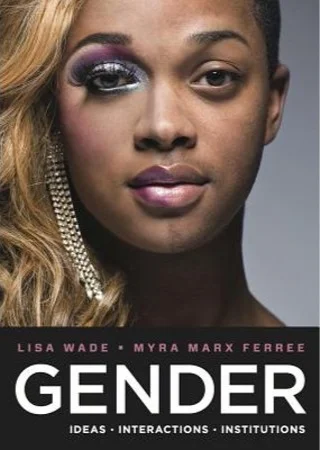
Gender: Ideas, Interactions, Institutions
(W. W. Norton & Company, 2014)
By Lisa Wade and Myra Marx Ferree

(W. W. Norton & Company, 2014)
By Lisa Wade and Myra Marx Ferree
A lively exploration of current questions of gender and their application to students today.
Wade and Ferree’s first edition textbook is a lively introduction to the sociology of gender. Probing questions, the same ones that students often bring to the course, frame readable chapters that are packed with the most up-to-date scholarship available―in language students will understand. The authors use memorable examples mined from pop culture, history, psychology, biology, and everyday life to truly engage students in the study of gender and spark interest in sociological perspectives.

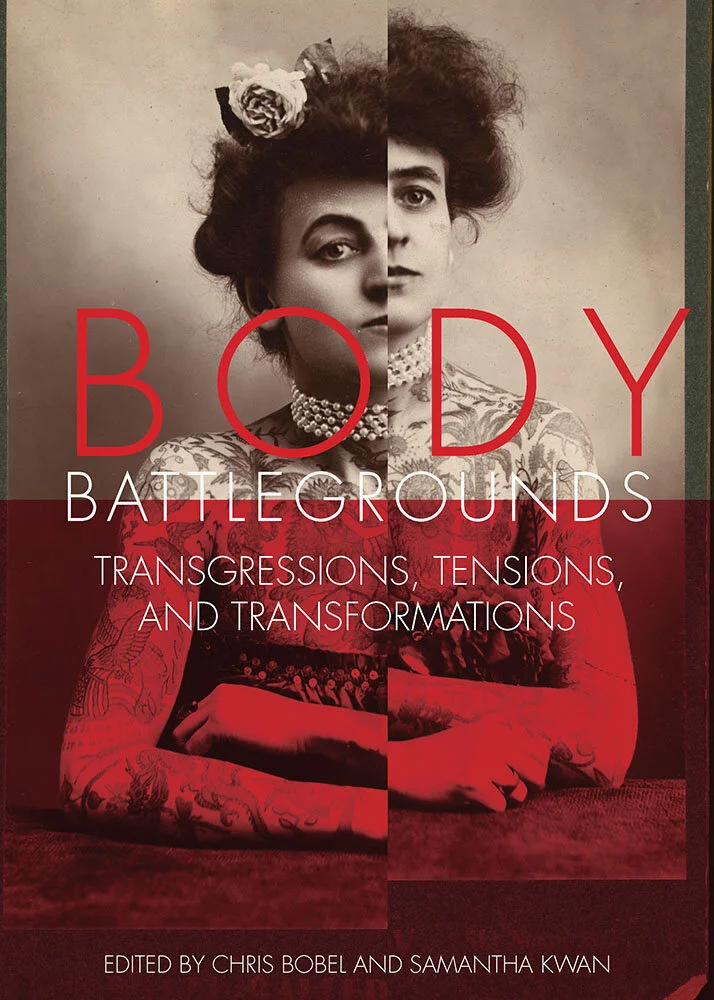
Body Battlegrounds: Transgressions, Tensions, and Transformations
(Vanderbilt UniversityPress, 2019)
Edited By Chris Bobel and Samantha Kwan
(Vanderbilt University Press, 2019)
Edited By Chris Bobel and Samantha Kwan
Body Battlegrounds explores the rich and complex lives of society's body outlaws—individuals from myriad social locations who oppose hegemonic norms, customs, and conventions about the body. Original research chapters (based on textual analysis, qualitative interviews, and participant observation) along with personal narratives provide a window into the everyday lives of people rewriting the norms of embodiment in sites like schools, sporting events, and doctors' offices.

An Archive of the Catastrophe: The Unused Footage of Claude Lanzmann's Shoah
(SUNY Press, 2019)
By Jennifer Cazenave

(SUNY Press, 2019)
By Jennifer Cazenave
Comprehensive analysis of 220 hours of outtakes that impels us to reexamine our assumptions about a crucial Holocaust documentary.
Claude Lanzmann’s 1985 magnum opus, Shoah, is a canonical documentary on the Holocaust—and in film history. Over the course of twelve years, Lanzmann gathered 230 hours of location filming and interviews with survivors, witnesses, and perpetrators, which he condensed into a 9½-hour film. The unused footage was scattered and inaccessible for years before it was restored and digitized by the United States Holocaust Memorial Museum. In An Archive of the Catastrophe, Jennifer Cazenave presents the first comprehensive study of this collection. She argues that the outtakes pose a major challenge to the representational and theoretical paradigms produced by the documentary, while offering new meanings of Shoah and of Holocaust testimony writ large. They lend fresh insight into issues raised by the film, including questions of resistance, rescue, refugees, and, above all, gender—Lanzmann’s twenty hours of interviews with women make up a mere ten minutes of the finished documentary. As a rare instance of outtakes preserved during the predigital era of cinema, this unused footage challenges us to establish a new critical framework for understanding how documentaries are constructed and reshapes the way we view this key Holocaust film.

Moxie and a Good Sense of Balance: Nancy Drew and the Power of the Teenage Girl
(Rowman & Littlefield, 2018)
By Lynne Byall Benson

(Rowman & Littlefield, 2018)
By Lynne Byall Benson
The literary character of Nancy Drew, created by the Stratemeyer publishing syndicate in the 1930s, has endured for more than eighty years. Successfully solving complicated mysteries, Nancy Drew offered girls the role model of a confident, independent young woman, functioning simultaneously within what was considered appropriate within the sphere of her gender and outside of that sphere in terms of her so-called moxie. Nancy Drew’s portrayal in the books has changed over the years, reflecting changing social norms, becoming a more obedient and less independent in the 1940s as women returned to traditional roles after World War II. Surprisingly, the Nancy Drew of the 1970s and 1980s did not reflect the changes brought about by the women’s movement and instead was transformed into a glamorous, globe-trotting professional private investigator in The Nancy Drew Files. The publishers soon came to their senses and brought back the plucky Nancy of old. In addition to analyzing Nancy Drew as a proto-feminist role model, Lynne Byall Benson provides a comprehensive bibliography of sources that can be used by scholars and teachers.

Witnessing Girlhood: Toward an Intersectional Tradition of Life Writing
(Fordham University Press, 2019)
By Leigh Gilmore and Elizabeth Marshall

(Fordham University Press, 2019)
By Leigh Gilmore and Elizabeth Marshall
When more than 150 women testified in 2018 to the sexual abuse inflicted on them by Dr. Larry Nassar when they were young, competitive gymnasts, they exposed and transformed the conditions that shielded their violation, including the testimonial disadvantages that cluster at the site of gender, youth, and race. In Witnessing Girlhood, Leigh Gilmore and Elizabeth Marshall argue that they also joined a long tradition of autobiographical writing led by women of color in which adults use the figure and narrative of child witness to expose harm and seek justice. Witnessing Girlhood charts a history of how women use life narrative to transform conditions of suffering, silencing, and injustice into accounts that enjoin ethical response. Drawing on a deep and diverse archive of self-representational forms―slave narratives, testimonio, memoir, comics, and picture books―Gilmore and Marshall attend to how authors return to a narrative of traumatized and silenced girlhood and the figure of the child witness in order to offer public testimony. Emerging within these accounts are key scenes and figures that link a range of texts and forms from the mid–nineteenth century to the contemporary period. Gilmore and Marshall offer a genealogy of the reverberations across timelines, self-representational acts, and jurisdictions of the child witness in life writing. Reconstructing these historical and theoretical trajectories restores an intersectional testimonial history of writing by women of color about sexual and racist violence to the center of life writing and, in so doing, furthers our capacity to engage ethically with representations of vulnerability, childhood, and collective witness.

Interdisciplinary Approaches to Human Rights: History, Politics, Practice
(Routledge, 2019)
Edited By Ranjini Srikanth and Elora Halim Chowdhury

(Routledge, 2019)
Edited By Ranjini Srikanth and Elora Halim Chowdhury
Interdisciplinary Approaches to Human Rights: History, Politics, Practice is an edited collection that brings together analyses of human rights work from multiple disciplines. Within the academic sphere, this book will garner interest from scholars who are invested in human rights as a field of study, as well as those who research, and are engaged in, the praxis of human rights.
Referring to the historical and cross-cultural study of human rights, the volume engages with disciplinary debates in political philosophy, gender and women’s studies, Global South/Third World studies, international relations, psychology, and anthropology. At the same time, the authors employ diverse methodologies including oral history, theoretical and discourse analysis, ethnography, and literary and cinema studies. Within the field of human rights studies, this book attends to the critical academic gap on interdisciplinary and praxis-based approaches to the field, as opposed to a predominantly legalistic focus, drawing from case studies from a wide range of contexts in the Global South, including Bangladesh, Colombia, Haiti, India, Mexico, Palestine, and Sudan, as well as from Australia and the United States in the Global North.
For students who will go on to become researchers, practitioners, policy makers, and activists, this collection of essays will demonstrate the multifaceted landscape of human rights and the multiple forces (philosophical, political, cultural, economic, historical) that affect it.

Economic and Social Rights in a Neoliberal World
(Columbia University Press, 2018)
Edited By Gillian MacNaughton and Diane F. Frey

(Cambridge University Press, 2019)
Edited By Gillian MacNaughton and Diane F. Frey
The rise of neoliberal policy and practice simultaneous to the growing recognition of economic and social rights presents a puzzle. Can the rights to food, water, health education, decent work, social security and the benefits of science prevail against market fundamentalism? Economic and Social Rights in a Neoliberal World is about the potential of these rights to contest the adverse impacts of neoliberal policy and practice on human wellbeing. Cutting across several lines of human rights literature, the chapters address norm development, court decision making, policymaking, advocacy, measurement and social mobilization. The analyses reveal that neoliberalism infiltrates management practices, changes international policy goals, flattens public school curriculum and distorts the outputs of UN human rights treaty bodies. Are economic and social rights successful in challenging neoliberalism, are they simply marginalized or are they co-opted and incorporated into neoliberal frameworks? This multidisciplinary work by a geographically diverse group of scholars and practitioners begins to address these questions.

Monstrous Intimacies: Making Post Slavery Subjects
(Duke University Press Books, 2010)
By Christina Sharpe

(Duke University Press Books, 2010)
By Christina Sharpe
Arguing that the fundamental, familiar, sexual violence of slavery and racialized subjugation have continued to shape black and white subjectivities into the present, Christina Sharpe interprets African diasporic and Black Atlantic visual and literary texts that address those “monstrous intimacies” and their repetition as constitutive of post-slavery subjectivity. Her illuminating readings juxtapose Frederick Douglass’s narrative of witnessing the brutal beating of his Aunt Hester with Essie Mae Washington-Williams’s declaration of freedom in Dear Senator: A Memoir by the Daughter of Strom Thurmond, as well as the “generational genital fantasies” depicted in Gayl Jones’s novel Corregidora with a firsthand account of such “monstrous intimacies” in the journals of an antebellum South Carolina senator, slaveholder, and vocal critic of miscegenation. Sharpe explores the South African–born writer Bessie Head’s novel Maru—about race, power, and liberation in Botswana—in light of the history of the KhoiSan woman Saartje Baartman, who was displayed in Europe as the “Hottentot Venus” in the nineteenth century. Reading Isaac Julien’s film The Attendant, Sharpe takes up issues of representation, slavery, and the sadomasochism of everyday black life. Her powerful meditation on intimacy, subjection, and subjectivity culminates in an analysis of Kara Walker’s black silhouettes, and the critiques leveled against both the silhouettes and the artist.

Acts of Gaiety: LGBT Performance and the Politics of Pleasure
(University of Michigan Press, 2012)
By Sarah Warner

(University of Michigan Press, 2012)
By Sarah Warner
Against queer theory's long-suffering romance with mourning and melancholia and a national agenda that urges homosexuals to renounce pleasure if they want to be taken seriously, Acts of Gaiety seeks to reanimate notions of "gaiety" as a political value for LGBT activism by recovering earlier mirthful modes of political performance. The book mines the archives of lesbian-feminist activism of the 1960s–70s, highlighting the outrageous gaiety—including camp, kitsch, drag, guerrilla theater, zap actions, rallies, manifestos, pageants, and parades alongside "legitimate theater”-- at the center of the social and theatrical performances of the era. Juxtaposing figures such as Valerie Solanas and Jill Johnston with more recent performers and activists including Hothead Paisan, Bitch and Animal, and the Five Lesbian Brothers, Sara Warner shows how reclaiming this largely discarded and disavowed past elucidates possibilities for being and belonging. Acts of Gaietyexplores the mutually informing histories of gayness as politics and as joie de vivre, along with the centrality of liveliness to queer performance and protest.

Resisting Reality: Social Construction and Social Critique
(Oxford University Press, 2011)
By Sally Haslanger

(Oxford University Press, 2011)
By Sally Haslanger
Contemporary theorists use the term "social construction" with the aim of exposing how what's purportedly "natural" is often at least partly social and, more specifically, how this masking of the social is politically significant. In these previously published essays, Sally Haslanger draws on insights from feminist and critical race theory to explore and develop the idea that gender and race are positions within a structure of social relations. On this interpretation, the point of saying that gender and race are socially constructed is not to make a causal claim about the origins of our concepts of gender and race, or to take a stand in the nature/nurture debate, but to locate these categories within a realist social ontology. This is politically important, for by theorizing how gender and race fit within different structures of social relations we are better able to identify and combat forms of systematic injustice.
Although the central essays of the book focus on a critical social realism about gender and race, these accounts function as case studies for a broader critical social realism. To develop this broader approach, several essays offer reworked notions of ideology, practice, and social structure, drawing on recent research in sociology and social psychology. Ideology, on the proposed view, is a relatively stable set of shared dispositions to respond to the world, often in ways that also shape the world to evoke those very dispositions. This looping of our dispositions through the material world enables the social to appear natural.
Additional essays in the book situate this approach to social phenomena in relation to philosophical methodology, and to specific debates in metaphysics, epistemology, and philosophy of language. The book as a whole explores the interface between analytic philosophy and critical theory.

Transnational Reversed: Women Organizing Against Gendered Violence in Bangladesh
(SUNY Press, 2011)
By Elora Chowdhury

(SUNY Press, 2011)
By Elora Chowdhury
Acid attacks against women and girls have captured the attention of the global media, with several high-profile reports ranging from the BBC to The Oprah Winfrey Show. In Bangladesh, reasons for the attacks include women’s rejection of sexual advances from men, refusal of marriage proposals, family or land disputes, and unmet dowry demands. The consequences are multiple: permanent marks on the body, disfiguration, and potential blindness. In Transnationalism Reversed, Elora Halim Chowdhury explores the complicated terrain of women’s transnational antiviolence organizing by focusing on the work done in Bangladesh around acid attacks—and the ways in which the state, international agencies, local expatriates, US media, Bangladeshi immigrants in the United States, survivor-activists, and local women’s organizations engage the pragmatics and the transnational rhetoric of empowerment, rescue, and rehabilitation. Grounded in careful ethnographic work, oral history, and theoretical and filmic analysis, Transnationalism Reversed makes a significant contribution to conversations around gendered violence, transnational feminist praxis, and the politics of organizing—particularly around NGOs—in the global South.

Shaping the Future of African American Film: Color-Coded Economics and the Story Behind the Numbers
(Rutgers University Press, 2014)
By Monica Ndounou

(Rutgers University Press, 2014)
By Monica White Ndounou
In Hollywood, we hear, it’s all about the money. It’s a ready explanation for why so few black films get made—no crossover appeal, no promise of a big payoff. But what if the money itself is color-coded? What if the economics that governs film production is so skewed that no film by, about, or for people of color will ever look like a worthy investment unless it follows specific racial or gender patterns? This, Monica Ndounou shows us, is precisely the case. In a work as revealing about the culture of filmmaking as it is about the distorted economics of African American film, Ndounou clearly traces the insidious connections between history, content, and cash in black films.
How does history come into it? Hollywood’s reliance on past performance as a measure of potential success virtually guarantees that historically underrepresented, underfunded, and undersold African American films devalue the future prospects of black films. So the cycle continues as it has for nearly a century. Behind the scenes, the numbers are far from neutral. Analyzing the onscreen narratives and off-screen circumstances behind nearly two thousand films featuring African Americans in leading and supporting roles, including such recent productions as Bamboozled, Beloved, and Tyler Perry’s Diary of a Mad Black Woman, Ndounou exposes the cultural and racial constraints that limit not just the production but also the expression and creative freedom of black films. Her wide-ranging analysis reaches into questions of literature, language, speech and dialect, film images and narrative, acting, theater and film business practices, production history and financing, and organizational history.
By uncovering the ideology behind profit-driven industry practices that reshape narratives by, about, and for people of color, this provocative work brings to light existing limitations—and possibilities for reworking stories and business practices in theater, literature, and film.

The Tolerance Trap: How God, Genes, and Good Intentions are Sabotaging Gay Equality
(NYU Press, 2014)
By Suzanna Walters

(NYU Press, 2014)
By Suzanna Walters
From Glee to gay marriage, from lesbian senators to out gay Marines, we have undoubtedly experienced a seismic shift in attitudes about gays in American politics and culture. Our reigning national story is that a new era of rainbow acceptance is at hand. But dig a bit deeper, and this seemingly brave new gay world is disappointing. For all of the undeniable changes, the plea for tolerance has sabotaged the full integration of gays into American life. Same-sex marriage is unrecognized and unpopular in the vast majority of states, hate crimes proliferate, and even in the much vaunted “gay friendly” world of Hollywood and celebrity culture, precious few stars are openly gay.
In The Tolerance Trap, Suzanna Walters takes on received wisdom about gay identities and gay rights, arguing that we are not “almost there,” but on the contrary have settled for a watered-down goal of tolerance and acceptance rather than a robust claim to full civil rights. After all, we tolerate unpleasant realities: medicine with strong side effects, a long commute, an annoying relative. Drawing on a vast array of sources and sharing her own personal journey, Walters shows how the low bar of tolerance demeans rather than ennobles both gays and straights alike. Her fascinating examination covers the gains in political inclusion and the persistence of anti-gay laws, the easy-out sexual freedom of queer youth and the suicides and murders of those in decidedly intolerant environments. She challenges both “born that way” storylines that root civil rights in biology, and “god made me that way” arguments that similarly situate sexuality as innate and impervious to decisions we make to shape it. A sharp and provocative cultural critique, this book deftly argues that a too-soon declaration of victory short-circuits full equality and deprives us all of the transformative possibilities of full integration. Tolerance is not the end goal, but a dead end. In The Tolerance Trap, Walters presents a complicated snapshot of a world-shifting moment in American history—one that is both a wake-up call and a call to arms for anyone seeking true equality.

Daughters of Parvati: Women and the Madness in Contemporary India
(University of Pennsylvania Press, 2014)
By Sarah Pinto
(University of Pennsylvania Press, 2014)
By Sarah Pinto
In her role as devoted wife, the Hindu goddess Parvati is the divine embodiment of viraha, the agony of separation from one's beloved, a form of love that is also intense suffering. These contradictory emotions reflect the overlapping dissolutions of love, family, and mental health explored by Sarah Pinto in this visceral ethnography.
Daughters of Parvati centers on the lives of women in different settings of psychiatric care in northern India, particularly the contrasting environments of a private mental health clinic and a wing of a government hospital. Through an anthropological consideration of modern medicine in a nonwestern setting, Pinto challenges the dominant framework for addressing crises such as long-term involuntary commitment, poor treatment in homes, scarcity of licensed practitioners, heavy use of pharmaceuticals, and the ways psychiatry may reproduce constraining social conditions. Inflected by the author's own experience of separation and single motherhood during her fieldwork, Daughters of Parvati urges us to think about the ways women bear the consequences of the vulnerabilities of love and family in their minds, bodies, and social worlds.
The Sexuality of History: Modernity and the Sapphic, 1565-1830
(University of Chicago Press, 2014)
By Sue Lanser
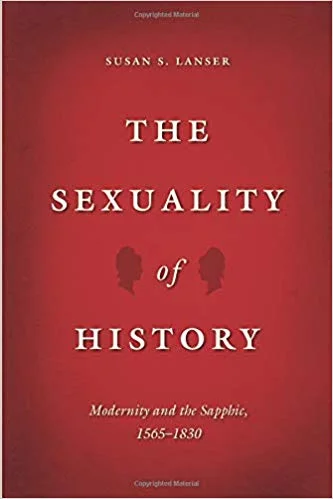
(University of Chicago Press, 2014)
By Sue Lanser
The period of reform, revolution, and reaction that characterized seventeenth- and eighteenth-century Europe also witnessed an intensified interest in lesbians. In scientific treatises and orientalist travelogues, in French court gossip and Dutch court records, in passionate verse, in the rising novel, and in cross-dressed flirtations on the English and Spanish stage, poets, playwrights, philosophers, and physicians were placing sapphic relations before the public eye.
In The Sexuality of History, Susan S. Lanser shows how intimacies between women became harbingers of the modern, bringing the sapphic into the mainstream of some of the most significant events in Western Europe. Ideas about female same-sex relations became a focal point for intellectual and cultural contests between authority and liberty, power and difference, desire and duty, mobility and change, order and governance. Lanser explores the ways in which a historically specific interest in lesbians intersected with, and stimulated, systemic concerns that would seem to have little to do with sexuality. Departing from the prevailing trend of queer reading whereby scholars ferret out hidden content in “closeted” texts, Lanser situates overtly erotic representations within wider spheres of interest. The Sexuality of History shows that just as we can understand sexuality by studying the past, so too can we understand the past by studying sexuality.

Miss Anne in Harlem: The White Women of the Black Renaissance
(Harper Paperback, 2014)
By Carla Kaplan

(Harper Paperback, 2014)
By Carla Kaplan
Celebrated scholar Carla Kaplan’s cultural biography, Miss Anne in Harlem: The White Women of the Black Renaissance, focuses on white women, collectively called “Miss Anne,” who became Harlem Renaissance insiders.
The 1920s in New York City was a time of freedom, experimentation, and passion—with Harlem at the epicenter. White men could go uptown to see jazz and modern dance, but women who embraced black culture too enthusiastically could be ostracized.
Miss Anne in Harlem focuses on six of the unconventional, free-thinking women, some from Manhattan high society, many Jewish, who crossed race lines and defied social conventions to become a part of the culture and heartbeat of Harlem.
Ethnic and gender studies professor Carla Kaplan brings the interracial history of the Harlem Renaissance to life with vivid prose, extensive research, and period photographs.

Feminist Research Practice: A Primer, 2nd Edition
(Sage Publications, 2013)
By Sharlene Hesse-Biber

(Sage Publications, 2013)
By Sharlene Hesse-Biber
The fully revised and updated Second Edition of Feminist Research Practice: A Primer, edited by Sharlene Nagy Hesse-Biber, draws on the expertise of a stellar group of interdisciplinary scholars who cover cutting-edge research methods and explore research questions related to the complex and diverse issues that deeply impact women’s lives. This text offers a unique hands-on approach to research by featuring engaging and relevant exercises as well as behind-the-scenes glimpses of feminist researchers at work. The in-depth examples cover the range of research questions that feminists engage with, including issues of gender inequality, violence against women, body image issues, and the discrimination of other marginalized groups. Written in a clear, concise manner that invites students to explore and practice a wide range of research, the Second Edition offers seven new chapters that reflect the latest scholarship in the field, a stronger focus on ethics, new examples that bring concepts to life, effective learning tools, and more.