

Ishtyle: Accenting Gay Indian Nightlife
(University of Michigan Press, 2020)
By Kareem Khubchandani

(University of Michigan Press, 2020)
By Kareem Khubchandani
Gay nightlife as sociopolitical performance
Ishtyle follows queer South Asian men across borders into gay neighborhoods, nightclubs, bars, and house parties in Bangalore and Chicago. Bringing the cultural practices they are most familiar with into these spaces, these men accent the aesthetics of nightlife cultures through performance. Kareem Khubchandani develops the notion of “ishtyle” to name this accented style, while also showing how brown bodies inadvertently become accents themselves, ornamental inclusions in the racialized grammar of desire. Ishtyleallows us to reimagine a global class perpetually represented as docile and desexualized workers caught in the web of global capitalism. The book highlights a different kind of labor, the embodied work these men do to feel queer and sexy together. Engaging major themes in queer studies, Khubchandani explains how his interlocutors’ performances stage relationships between: colonial law and public sexuality; film divas and queer fans; and race, caste, and desire. Ultimately, the book demonstrates that the unlikely site of nightlife can be a productive venue for the study of global politics and its institutional hierarchies.

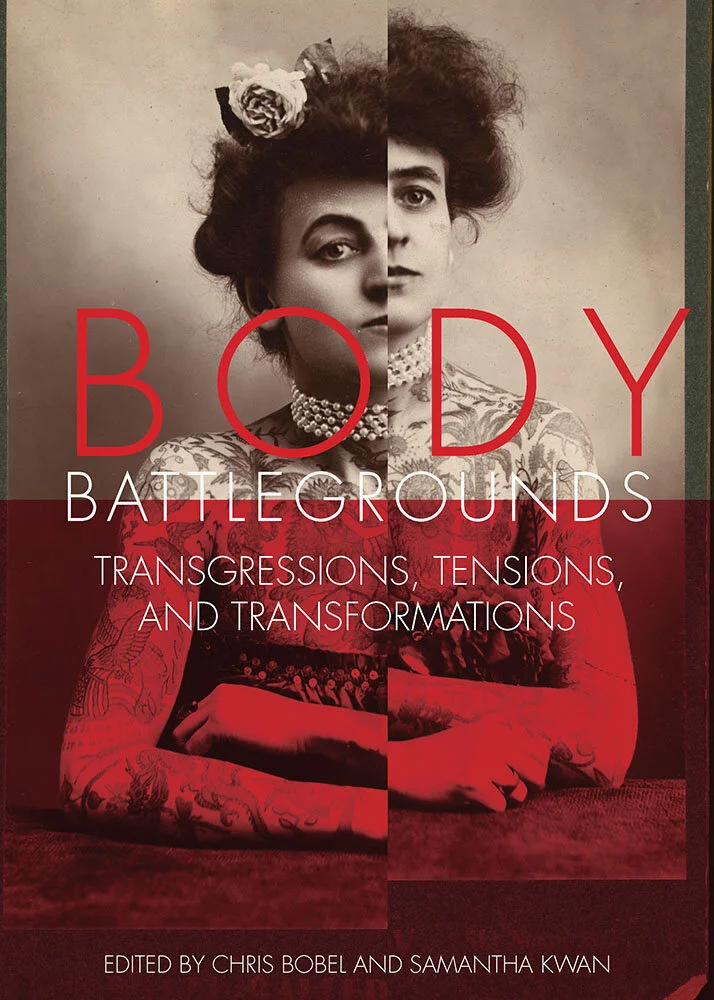
Body Battlegrounds: Transgressions, Tensions, and Transformations
(Vanderbilt UniversityPress, 2019)
Edited By Chris Bobel and Samantha Kwan
(Vanderbilt University Press, 2019)
Edited By Chris Bobel and Samantha Kwan
Body Battlegrounds explores the rich and complex lives of society's body outlaws—individuals from myriad social locations who oppose hegemonic norms, customs, and conventions about the body. Original research chapters (based on textual analysis, qualitative interviews, and participant observation) along with personal narratives provide a window into the everyday lives of people rewriting the norms of embodiment in sites like schools, sporting events, and doctors' offices.

Regulating Desire: From the Virtuous Maiden to the Purity Princess
(SUNY, 2014)
By Shoshanna Ehrlich

(SUNY, 2014)
By Shoshanna Ehrlick
Starting with the mid-nineteenth-century campaign by the American Female Moral Reform Society to criminalize seduction and moving forward to the late twentieth-century conservative effort to codify a national abstinence-only education policy, Regulating Desire explores the legal regulation of young women’s sexuality in the United States. The book covers five distinct time periods in which changing social conditions generated considerable public anxiety about youthful female sexuality and examines how successive generations of reformers sought to revise the law in an effort to manage unruly desires and restore a gendered social order. J. Shoshanna Ehrlich draws upon a rich array of primary source materials, including reform periodicals, court cases, legislative hearing records, and abstinence curricula to create an interdisciplinary narrative of socially embedded legal change. Capturing the complex and dynamic nature of the relationship between the state and the sexualized youthful female body, she highlights how the law both embodies and shapes gendered understandings of normative desire as mediated by considerations of race and class.

The Managed Body: Developing Girls and Menstrual Health in the Global South
(Palgrave Macmillan, 2018)
By Chris Bobel

(Palgrave Macmillan, 2018)
By Chris Bobel
The Managed Body productively complicates ‘menstrual hygiene management’ (MHM)--a growing social movement to support menstruating girls in the Global South. Bobel offers an invested critique of the complicated discourses of MHM including its conceptual and practical links with the Water, Sanitation and Hygiene (WASH) development sector, human rights and ‘the girling of development.’ Drawing on analysis of in-depth interviews, participant observations and the digital materials of NGOs and social businesses, Bobel shows how MHM frames problems and solutions to capture attention and direct resources to this highly-tabooed topic. She asserts that MHM organizations often inadvertently rely upon weak evidence and spectacularized representations to make the claim of a ‘hygienic crisis’ that authorizes rescue. And, she argues, the largely product-based solutions that follow fail to challenge the social construction of the menstrual body as dirty and in need of concealment. While cast as fundamental to preserving girls’ dignity, MHM prioritizes ‘technological fixes’ that teach girls to discipline their developing bodies vis a vis consumer culture, a move that actually accommodates more than it resists the core problem of menstrual stigma.