

Understanding Survey Methodology: Sociological Theory and Applications
( Springer, 2020)
By Philip S. Brenner

( Springer, 2020)
By Philip S. Brenner
This volume ambitiously applies sociological theory to create an understanding of aspects of survey methodology. It focuses on the interplay between sociology and survey methodology: what sociological theory and approaches can offer to survey research and vice versa. The volume starts with a focus on direct connections between sociological theories and their applications in survey research. It further presents cutting-edge, original research that applies the “sociological imagination” to substantive concerns important to sociologists, survey methodologists, and social scientists and includes issues such as health, immigration, race/ethnicity, gender and sexuality, and criminal justice.

Abusing Religion: Literary Persecution, Sex Scandals, and American Minority Religions
(Rutgers University Press, 2020)
By Megan Goodwin

(Rutgers University Press, 2020)
By Megan Goodwin
Sex abuse happens in all communities, but American minority religions often face disproportionate allegations of sexual abuse. Why, in a country that consistently fails to acknowledge—much less address—the sexual abuse of women and children, do American religious outsiders so often face allegations of sexual misconduct? Why does the American public presume to know “what’s really going on” in minority religious communities? Why are sex abuse allegations such an effective way to discredit people on America’s religious margins? What makes Americans so willing, so eager to identify religion as the cause of sex abuse? Abusing Religion argues that sex abuse in minority religious communities is an American problem, not (merely) a religious one.

The Doctor and Mrs. A: Ethics and Counter-Ethics in an Indian Dream Analysis
(Fordham University Press, 2020)
By Sarah Pinto

(Fordham University Press, 2020)
By Sarah Pinto
Just before India’s independence, a young Punjabi woman, ill at ease in her marriage and eager for personal and national freedom, sat down with psychiatrist Dev Satya Nand for an experiment in his new method of dream analysis. The published analysis documents a surge of emotion and reflections on sexuality, gender, marriage, ambition, trauma, and art. “Mrs. A.” (as she is known) turned to female figures from Hindu myth to reimagine her social world and its ethical arrangements, envisioning a future beyond marriage, colonial rule, and gendered constraints.
This book explores the conversation between Mrs. A. and Satya Nand, its window onto gender and sexuality in late colonial Indian society, and the ways Mrs. A. put ethics in motion, creating alternatives to ideals of belonging, recognition, and consciousness. It finds in Mrs. A.’s musings repertoires for the creative transformation of ideals and explores the possibilities of thinking with a dynamic concept of counter-ethics. An unconventional history of gender and sexuality in late colonialism, this book reminds us that the west did not invent feminism, that psychiatry’s history of innovation and creativity is global, and that ethical thinking does not need to center on western myths or paradigms.

Waithood: Gender, Education, and Global Delays in Marriage and Childbearing
(Berghahn, 2020)
By Marcia C. Inhorn & Nancy J. Smith-Hefner

(Berghahn, 2020)
By Marcia C. Inhorn & Nancy J. Smith-Hefner
The concept of “Waithood” was developed by political scientist Diane Singerman to describe the expanding period of time between adolescence and full adulthood as young people wait to secure steady employment and marry. The contributors to this volume employ the waithood concept as a frame for richly detailed ethnographic studies of “youth in waiting” from a variety of world areas, including the Middle East Africa, Asia, Europe, Latin America and the U.S, revealing that whether voluntary or involuntary, the phenomenon of youth waithood necessitates a recognition of new gender and family roles.

Islamizing Intimacies: Youth, Sexuality and Gender in Contemporary Indonesia
(University of Hawaii Press, 2019)
By Nancy J. Smith-Hefner

(University of Hawaii Press, 2019)
By Nancy J. Smith-Hefner
Economic change but the reshaping of young Muslims’ styles of romance, courtship, and marriage. Nancy J. Smith-Hefner takes up the personal lives and sexual attitudes of educated Muslim Javanese youth in the city of Yogyakarta to explore the dramatic social and ethical changes taking place in Indonesian society. Drawing on more than 250 interviews over a fifteen-year period, her vivid, well-crafted ethnography is full of insights into the real-life struggles of young Muslims and framed by a deep understanding of Indonesia’s wider debates on gender and youth culture.
The changes among Muslim youth reflect an ongoing if at times unsteady attempt to balance varied ideals, ethical concerns, and aspirations. On the one hand, growing numbers of young people show a deep and pervasive desire for a more active role in their Islamic faith. On the other, even as they seek a more self-conscious and scripture-based profession of faith, many educated youth aspire to personal relationships similar to those seen among youth elsewhere—a greater measure of informality, openness, and intimacy than was typical for their parents’ and grandparents’ generations. Young women in particular seek freedom for self-expression, employment, and social fulfillment outside of the home. Smith-Hefner pays particular attention to their shifting roles and perspectives because it is young women who have been most dramatically affected by the upheavals transforming this Muslim-majority country. Although deeply personal, the changing aspirations of young Muslims have immense implications for social and public life throughout Indonesia.
The fruit of a longitudinal study begun shortly after the fall of the authoritarian New Order government and the return to democracy in 1998–1999, the book reflects Smith-Hefner’s nearly forty years of anthropological engagement with the island of Java and her continuing exploration into what it means to be both “modern” and Muslim. The culture of the new Muslim youth, the author shows, through all its nuances and variations, reflects the inexorable abandonment of traditions and practices deemed incompatible with authentic Islam and an ongoing and profound Islamization of intimacies.

Crossings and Encounters: Race, Gender, and Sexuality in the Atlantic World
(University of South Carolina Press, 2020)
By Laura Prieto

(University of South Carolina Press, 2020)
By Laura Prieto
For centuries the Atlantic world has been a site of encounter and exchange, a rich point of transit where one could remake one's identity or find it transformed. Through this interdisciplinary collection of essays, Laura R. Prieto and Stephen R. Berry offer vivid new accounts of how individuals remapped race, gender, and sexuality through their lived experience and in the cultural imagination. Crossings and Encounters is the first single volume to address these three intersecting categories across the Atlantic world and beyond the colonial period.
The Atlantic world offered novel possibilities to and exposed vulnerabilities of many kinds of people, from travelers to urban dwellers, native Americans to refugees. European colonial officials tried to regulate relationships and impose rigid ideologies of gender, while perceived distinctions of culture, religion, and ethnicity gradually calcified into modern concepts of race. Amid the instabilities of colonial settlement and slave societies, people formed cross-racial sexual relationships, marriages, families, and households. These not only afforded some women and men with opportunities to achieve stability; they also furnished ways to redefine one's status.
Crossings and Encounters spans broadly from early contact zones in the seventeenth-century Americas to the postcolonial present, and it covers the full range of the Atlantic world, including the Caribbean, North America, and Latin America. The essays examine the historical intersections between race and gender to illuminate the fluid identities and the dynamic communities of the Atlantic world.

At Risk: Indian Sexual Politics and the Global AIDS Crisis
(Stanford University Press, 2021)
By Gowri Vijayakumar

(Stanford University Press, 2021)
By Gowri Vijayakumar
In the mid-1990s, experts predicted that India would face the world's biggest AIDS epidemic by 2000. Though a crisis at this scale never fully materialized, global public health institutions, donors, and the Indian state initiated a massive effort to prevent it. HIV prevention programs channeled billions of dollars toward those groups designated as at-risk—sex workers and men who have sex with men. At Risk captures this unique moment in which these criminalized and marginalized groups reinvented their "at-risk" categorization and became central players in the crisis response. The AIDS crisis created a contradictory, conditional, and temporary opening for sex-worker and LGBTIQ activists to renegotiate citizenship and to make demands on the state.
Working across India and Kenya, Gowri Vijayakumar provides a fine-grained account of the political struggles at the heart of the Indian AIDS response. These range from everyday articulations of sexual identity in activist organizations in Bangalore to new approaches to HIV prevention in Nairobi, where prevention strategies first introduced in India are adapted and circulate, as in the global AIDS field more broadly. Vijayakumar illuminates how the politics of gender, sexuality, and nationalism shape global crisis response. In so doing, she considers the precarious potential for social change in and after a crisis.

Sexual States: Governance and the Struggle over the Antisodomy Law in India
(Duke University Press, 2016)
By Jyoti Puri

(Duke University Press, 2016)
By Jyoti Puri
In Sexual States, Jyoti Puri uses the example of the efforts to decriminalize homosexuality in India to show how the regulation of sexuality is fundamentally tied to the creation and enduring existence of the state. Between 2001 and 2013, activists attempted to rewrite section 377 of the Indian Penal Code, which outlaws homosexual behavior. Having interviewed activists and NGO workers throughout five metropolitan centers, investigated crime statistics at the National Crime Records Bureau, visited various state institutions, and met with the police, Puri found that section 377 is but one element of the large and complex systems of laws, practices, policies, and discourses that regulate Indian sexuality. Intended to mitigate sexuality's threat to the social order, this regulation works to preserve the views of the state as inevitable, legitimate, and indispensable. By highlighting the various means through which the regulation of sexuality constitutes India's heterogeneous and fragmented.

Indian Sex Life: Sexuality and the Colonial Origins of Modern Social Thought
(Princeton University Press, 2020)
By Durba Mitra

(Princeton University Press, 2020)
By Durba Mitra
During the colonial period in India, European scholars, British officials, and elite Indian intellectuals—philologists, administrators, doctors, ethnologists, sociologists, and social critics—deployed ideas about sexuality to understand modern Indian society. In Indian Sex Life, Durba Mitra shows how deviant female sexuality, particularly the concept of the prostitute, became foundational to this knowledge project and became the primary way to think and write about Indian society.
Bringing together vast archival materials from diverse disciplines, Mitra reveals that deviant female sexuality was critical to debates about social progress and exclusion, caste domination, marriage, widowhood and inheritance, women’s performance, the trafficking of girls, abortion and infanticide, industrial and domestic labor, indentured servitude, and ideologies about the dangers of Muslim sexuality. British authorities and Indian intellectuals used the concept of the prostitute to argue for the dramatic reorganization of modern Indian society around Hindu monogamy. Mitra demonstrates how the intellectual history of modern social thought is based in a dangerous civilizational logic built on the control and erasure of women’s sexuality. This logic continues to hold sway in present-day South Asia and the postcolonial world.
Reframing the prostitute as a concept, Indian Sex Life overturns long-established notions of how to write the history of modern social thought in colonial India, and opens up new approaches for the global history of sexuality.

The Oxford Handbook on Global LGBT and Sexual Diversity Politics
(Oxford University Press, 2020)
By Michael J. Bosia, Sandra M. McEvoy, and Momin Rahman

(Oxford University Press, 2020)
By Michael J. Bosia, Sandra M. McEvoy, and Momin Rahman
This Handbook contains chapters on the struggles for LGBT rights and the security of sexual and gender minorities around the world, with a substantial number of contributions from the Global South. It contextualizes the regional case studies within relevant theoretical frameworks from the sociology of sexualities, critical race studies, postcolonialism, indigenous theories, social movement theory, and international relations theory. Therefore, it provides readers with up-to-date empirical material as well as various ways of assessing the analytical significance, commonalities, and differences of global LGBT politics. As such, the chapters combine to present an overall interdisciplinary and critical perspective on contemporary LGBT politics.

Distributing Condoms and Hope: The Racialized Politics of Youth Sexual Health
(University of California Press, 2020)
By Chris Barcelos

(University of California Press, 2020)
By Chris Barcelos
Distributing Condoms and Hope is a feminist ethnographic account of how youth sexual health programs in the racially and economically stratified city of “Millerston” reproduce harm in the marginalized communities they are meant to serve.
Chris A. Barcelos makes space for the stories of young mothers, who often recognize the narrow ways that public health professionals respond to pregnancies. Barcelos's findings show that teachers, social workers, and nurses ignore systemic issues of race, class, and gender and instead advocate for individual-level solutions such as distributing condoms and promoting "hope." Through a lens of reproductive justice, Distributing Condoms and Hope imagines a different approach to serving marginalized youth—a support system that neither uses their lives as a basis for disciplinary public policies nor romanticizes their struggles.

Abortion Regret: The New Attack on Reproductive Freedom
(Praeger, 2019)
By J. Shoshanna Ehrlich and Alesha E. Doan

(Praeger, 2019)
By J. Shoshanna Ehrlich and Alesha E. Doan
An indispensable resource for students, scholars, and activists concerned about current attacks on abortion rights, this book offers an unmatched account of the emergence, consolidation, and consequences of the antiabortion movement's paternalistic abortion regret narrative.
• Examines the historical continuity of the abortion regret narrative as a political strategy used to limit women's access to abortion
• Asserts that the abortion regret narrative is intimately tied to a gendered and paternalistic construction of women's divine role as mothers
• Examines the antiabortion movement's strategy to place the "grieving" mother at the center of its oppositional narrative
• Uses interviews, textual analysis of primary sources, and content analysis of state antiabortion policies to trace the growing impact of the abortion regret narrative
• Examines and reveals the antiabortion movement's calculated political motivation for using the abortion regret narrative as its primary strategy to oppose abortion rights

The Tolerance Trap: How God, Genes, and Good Intentions are Sabotaging Gay Equality
(NYU Press, 2014)
By Suzanna Walters

(NYU Press, 2014)
By Suzanna Walters
From Glee to gay marriage, from lesbian senators to out gay Marines, we have undoubtedly experienced a seismic shift in attitudes about gays in American politics and culture. Our reigning national story is that a new era of rainbow acceptance is at hand. But dig a bit deeper, and this seemingly brave new gay world is disappointing. For all of the undeniable changes, the plea for tolerance has sabotaged the full integration of gays into American life. Same-sex marriage is unrecognized and unpopular in the vast majority of states, hate crimes proliferate, and even in the much vaunted “gay friendly” world of Hollywood and celebrity culture, precious few stars are openly gay.
In The Tolerance Trap, Suzanna Walters takes on received wisdom about gay identities and gay rights, arguing that we are not “almost there,” but on the contrary have settled for a watered-down goal of tolerance and acceptance rather than a robust claim to full civil rights. After all, we tolerate unpleasant realities: medicine with strong side effects, a long commute, an annoying relative. Drawing on a vast array of sources and sharing her own personal journey, Walters shows how the low bar of tolerance demeans rather than ennobles both gays and straights alike. Her fascinating examination covers the gains in political inclusion and the persistence of anti-gay laws, the easy-out sexual freedom of queer youth and the suicides and murders of those in decidedly intolerant environments. She challenges both “born that way” storylines that root civil rights in biology, and “god made me that way” arguments that similarly situate sexuality as innate and impervious to decisions we make to shape it. A sharp and provocative cultural critique, this book deftly argues that a too-soon declaration of victory short-circuits full equality and deprives us all of the transformative possibilities of full integration. Tolerance is not the end goal, but a dead end. In The Tolerance Trap, Walters presents a complicated snapshot of a world-shifting moment in American history—one that is both a wake-up call and a call to arms for anyone seeking true equality.

The Sexuality of History: Modernity and the Sapphic, 1565-1830
(University of Chicago Press, 2014)
By Sue Lanser
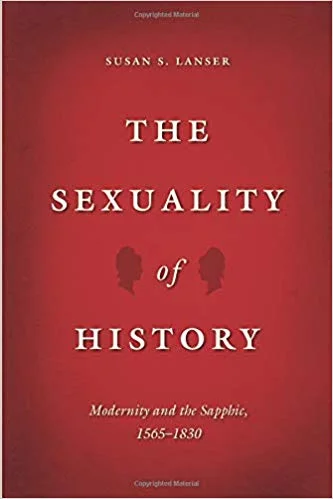
(University of Chicago Press, 2014)
By Sue Lanser
The period of reform, revolution, and reaction that characterized seventeenth- and eighteenth-century Europe also witnessed an intensified interest in lesbians. In scientific treatises and orientalist travelogues, in French court gossip and Dutch court records, in passionate verse, in the rising novel, and in cross-dressed flirtations on the English and Spanish stage, poets, playwrights, philosophers, and physicians were placing sapphic relations before the public eye.
In The Sexuality of History, Susan S. Lanser shows how intimacies between women became harbingers of the modern, bringing the sapphic into the mainstream of some of the most significant events in Western Europe. Ideas about female same-sex relations became a focal point for intellectual and cultural contests between authority and liberty, power and difference, desire and duty, mobility and change, order and governance. Lanser explores the ways in which a historically specific interest in lesbians intersected with, and stimulated, systemic concerns that would seem to have little to do with sexuality. Departing from the prevailing trend of queer reading whereby scholars ferret out hidden content in “closeted” texts, Lanser situates overtly erotic representations within wider spheres of interest. The Sexuality of History shows that just as we can understand sexuality by studying the past, so too can we understand the past by studying sexuality.

Regulating Desire: From the Virtuous Maiden to the Purity Princess
(SUNY, 2014)
By Shoshanna Ehrlich

(SUNY, 2014)
By Shoshanna Ehrlick
Starting with the mid-nineteenth-century campaign by the American Female Moral Reform Society to criminalize seduction and moving forward to the late twentieth-century conservative effort to codify a national abstinence-only education policy, Regulating Desire explores the legal regulation of young women’s sexuality in the United States. The book covers five distinct time periods in which changing social conditions generated considerable public anxiety about youthful female sexuality and examines how successive generations of reformers sought to revise the law in an effort to manage unruly desires and restore a gendered social order. J. Shoshanna Ehrlich draws upon a rich array of primary source materials, including reform periodicals, court cases, legislative hearing records, and abstinence curricula to create an interdisciplinary narrative of socially embedded legal change. Capturing the complex and dynamic nature of the relationship between the state and the sexualized youthful female body, she highlights how the law both embodies and shapes gendered understandings of normative desire as mediated by considerations of race and class.