

Women, Power, and Property: The Paradox of Gender Equality Laws in India
(Cambridge University Press, 2020)
By Rachel E. Brulé

(Cambridge University Press, 2020)
By Rachel E. Brulé
Quotas for women in government have swept the globe. Yet we know little about their capacity to upend entrenched social, political, and economic hierarchies. Women, Power, and Property explores this question within the context of India, the world's largest democracy. Brulé employs a research design that maximizes causal inference alongside extensive field research to explain the relationship between political representation, backlash, and economic empowerment. Her findings show that women in government – gatekeepers – catalyze access to fundamental economic rights to property. Women in politics have the power to support constituent rights at critical junctures, such as marriage negotiations, when they can strike integrative solutions to intrahousehold bargaining. Yet there is a paradox: quotas are essential for enforcement of rights, but they generate backlash against women who gain rights without bargaining leverage. In this groundbreaking study, Brulé shows how well-designed quotas can operate as a crucial tool to foster equality and benefit the women they are meant to empower.

The Color of Creatorship: Race, Intellectual Property, and the Making of Americans
(Stanford University Press, 2020)
By Anjali Vats
(Stanford University Press, 2020)
By Anjali Vats
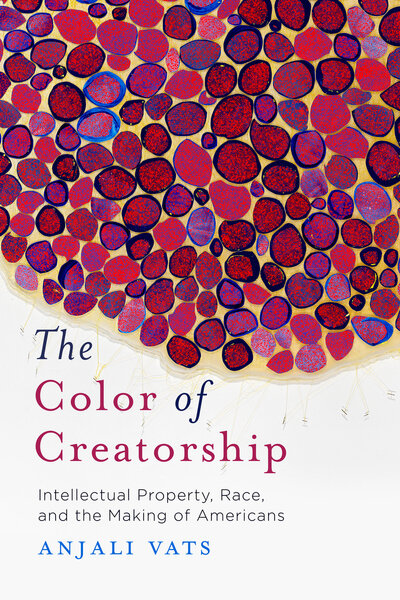
The Color of Creatorship examines how copyright, trademark, and patent discourses work together to form American ideals around race, citizenship, and property.
Working through key moments in intellectual property history since 1790, Anjali Vats reveals that even as they have seemingly evolved, American understandings of who is a creator and who is an infringer have remained remarkably racially conservative and consistent over time. Vats examines archival, legal, political, and popular culture texts to demonstrate how intellectual properties developed alongside definitions of the "good citizen," "bad citizen," and intellectual labor in racialized ways. Offering readers a theory of critical race intellectual property, Vats historicizes the figure of the citizen-creator, the white male maker who was incorporated into the national ideology as a key contributor to the nation's moral and economic development. She also traces the emergence of racial panics around infringement, arguing that the post-racial creator exists in opposition to the figure of the hyper-racial infringer, a national enemy who is the opposite of the hardworking, innovative American creator.
The Color of Creatorship contributes to a rapidly-developing conversation in critical race intellectual property. Vats argues that once anti-racist activists grapple with the underlying racial structures of intellectual property law, they can better advocate for strategies that resist the underlying drivers of racially disparate copyright, patent, and trademark policy.e harassment, fought racial discrimination, and aligned themselves with the dispossessed. Whether they were themselves straight, gay, or otherwise queer, they brought sexual dissidence and radicalism into conversation at the height of the Left's influence on American culture.
Combining rich archival research with inventive analysis of art and literature, Love’s Next Meeting explores the relationship between homosexuality and the Left in American culture between 1920 and 1960. Aaron S. Lecklider uncovers a lively cast of individuals and dynamic expressive works, revealing remarkably progressive engagement with homosexuality among radicals, workers, and the poor. Leftists connected sexual dissidence with radical gender politics, antiracism, and challenges to censorship and obscenity laws through the 1920s and 1930s. In the process, a wide array of activists, organizers, artists, and writers laid the foundation for a radical movement through which homosexual lives and experiences were given shape and new political identities were forged. Love's Next Meeting cuts to the heart of some of the biggest questions in American history: questions about socialism, about sexuality, about the supposed clash still making headlines today between leftist politics and identity politics. What emerges is a dramatic, sexually vibrant story of the shared struggles for liberation across the twentieth century.

Sexual States: Governance and the Struggle over the Antisodomy Law in India
(Duke University Press, 2016)
By Jyoti Puri
(Duke University Press, 2016)
By Jyoti Puri
In Sexual States, Jyoti Puri uses the example of the efforts to decriminalize homosexuality in India to show how the regulation of sexuality is fundamentally tied to the creation and enduring existence of the state. Between 2001 and 2013, activists attempted to rewrite section 377 of the Indian Penal Code, which outlaws homosexual behavior. Having interviewed activists and NGO workers throughout five metropolitan centers, investigated crime statistics at the National Crime Records Bureau, visited various state institutions, and met with the police, Puri found that section 377 is but one element of the large and complex systems of laws, practices, policies, and discourses that regulate Indian sexuality. Intended to mitigate sexuality's threat to the social order, this regulation works to preserve the views of the state as inevitable, legitimate, and indispensable. By highlighting the various means through which the regulation of sexuality constitutes India's heterogeneous and fragmented.

Abortion Regret: The New Attack on Reproductive Freedom
(Praeger, 2019)
By J. Shoshanna Ehrlich and Alesha E. Doan

(Praeger, 2019)
By J. Shoshanna Ehrlich and Alesha E. Doan
An indispensable resource for students, scholars, and activists concerned about current attacks on abortion rights, this book offers an unmatched account of the emergence, consolidation, and consequences of the antiabortion movement's paternalistic abortion regret narrative.
• Examines the historical continuity of the abortion regret narrative as a political strategy used to limit women's access to abortion
• Asserts that the abortion regret narrative is intimately tied to a gendered and paternalistic construction of women's divine role as mothers
• Examines the antiabortion movement's strategy to place the "grieving" mother at the center of its oppositional narrative
• Uses interviews, textual analysis of primary sources, and content analysis of state antiabortion policies to trace the growing impact of the abortion regret narrative
• Examines and reveals the antiabortion movement's calculated political motivation for using the abortion regret narrative as its primary strategy to oppose abortion rights

The Tolerance Trap: How God, Genes, and Good Intentions are Sabotaging Gay Equality
(NYU Press, 2014)
By Suzanna Walters

(NYU Press, 2014)
By Suzanna Walters
From Glee to gay marriage, from lesbian senators to out gay Marines, we have undoubtedly experienced a seismic shift in attitudes about gays in American politics and culture. Our reigning national story is that a new era of rainbow acceptance is at hand. But dig a bit deeper, and this seemingly brave new gay world is disappointing. For all of the undeniable changes, the plea for tolerance has sabotaged the full integration of gays into American life. Same-sex marriage is unrecognized and unpopular in the vast majority of states, hate crimes proliferate, and even in the much vaunted “gay friendly” world of Hollywood and celebrity culture, precious few stars are openly gay.
In The Tolerance Trap, Suzanna Walters takes on received wisdom about gay identities and gay rights, arguing that we are not “almost there,” but on the contrary have settled for a watered-down goal of tolerance and acceptance rather than a robust claim to full civil rights. After all, we tolerate unpleasant realities: medicine with strong side effects, a long commute, an annoying relative. Drawing on a vast array of sources and sharing her own personal journey, Walters shows how the low bar of tolerance demeans rather than ennobles both gays and straights alike. Her fascinating examination covers the gains in political inclusion and the persistence of anti-gay laws, the easy-out sexual freedom of queer youth and the suicides and murders of those in decidedly intolerant environments. She challenges both “born that way” storylines that root civil rights in biology, and “god made me that way” arguments that similarly situate sexuality as innate and impervious to decisions we make to shape it. A sharp and provocative cultural critique, this book deftly argues that a too-soon declaration of victory short-circuits full equality and deprives us all of the transformative possibilities of full integration. Tolerance is not the end goal, but a dead end. In The Tolerance Trap, Walters presents a complicated snapshot of a world-shifting moment in American history—one that is both a wake-up call and a call to arms for anyone seeking true equality.

Law of Desire: Temporary Marriage in Shi'i Iran
(Syracuse University Press, 2014)
By Shahla Haeri

(Syracuse University Press, 2014)
By Shahla Haeri
As an Iranian Muslim woman and a granddaughter of a well-known ayatollah, Shahla Haeri was accepted into the communities where she conducted her fieldwork on mut’a, temporary marriage. Mut’a is legally sanctioned among the Twelver Shi’ites who live predominantly in Iran.
Drawing on rich interviews that would have been denied a Western anthropologist, the author describes the concept of a temporary-marriage contract, in which a man and an unmarried woman (virgin, widow, or divorcee) decide how long they want to stay married to each other (from one hour to ninety-nine years) and how much money is to be given to the temporary wife. Since the Iranian revolution of 1979, the regime has conduction an intensive campaign to revitalize this form of marriage, and Shi’i ulama (religious scholars) support it as positive, self-affirming, and cognizant of human needs. Challenged by secularly educated urban Iranian women, and men and by the West, the ulama have been called upon to address themselves to the implications of this custom for modern Iranian society, to respond to the changes that mut’a is legally equivalent to hire or lease, that it is abusive of women, and that it is in fact legalized prostitution. Law if Desire thus makes available previously untapped and undocumented data about an institution in which sexuality, morality, religious rules, secular laws, and cultural practices converge. This important work will be of interest to cultural anthropologist, religious scholars, scholars of the Middle East, and lawyers as well as to those interested in the role of women in Islamic society.

Forever Suspect: Racialized Surveillance of Muslim Americans in the War on Terror (2018)
(Rutgers University Press, 2018)
By Saher Selod

(Rutgers University Press, 2018)
By Saher Selod
The declaration of a “War on Terror” in the aftermath of the September 11, 2001 terrorist attacks brought sweeping changes to the American criminal justice and national security systems, as well as a massive shift in the American public opinion of both individual Muslims and the Islamic religion generally. Since that time, sociologist Saher Selod argues, Muslim Americans have experienced higher levels of racism in their everyday lives. In Forever Suspect, Selod shows how a specific American religious identity has acquired racial meanings, resulting in the hyper surveillance of Muslim citizens. Drawing on forty-eight in-depth interviews with South Asian and Arab Muslim Americans, she investigates how Muslim Americans are subjected to racialized surveillance in both an institutional context by the state and a social context by their neighbors and co-workers. Forever Suspect underscores how this newly racialized religious identity changes the social location of Arabs and South Asians on the racial hierarchy further away from whiteness and compromises their status as American citizens.

Immigration Policy in the Age of Punishment: Detention, Deportation and Border Control
(Columbia University Press, 2018)
Edited by David C. Brotherton and Philip Kretsedemas

(Columbia University Press, 2018)
Edited by David C. Brotherton and Philip Kretsedemas
The events of 2016 catapulted immigration policy to the forefront of public debate, and Donald Trump’s administration has signaled a harsh turn in enforcement. Yet the deportation, detention, and border-control policies that North American and European countries have embraced are by no means new. In this book, sociologists David C. Brotherton and Philip Kretsedemas bring together an interdisciplinary group of contributors to reconsider the immigration policies of the Obama era and beyond in terms of a decades-long “age of punishment.”
Immigration Policy in the Age of Punishment takes a critical, interdisciplinary, and transnational look at current issues surrounding immigration in the U.S. and abroad. It examines key features of this age of punishment, connecting neoliberal governance, global labor markets, and the national obsession with securing borders to explain critical research and theory on immigration enforcement. Contributors document the continuities between presidential administrations and across countries from many perspectives, with chapters discussing Canada, Australia, France, the UK, the Dominican Republic, and Mexico in addition to the U.S. They offer macro-level analyses of deportations and border enforcement, analyses of national policy and jurisprudence, and ethnographic accounts of the daily life experience of the prison-to-deportation pipeline, the making of deportability, and post-deportation transitions for noncitizens. This book highlights new directions in critical immigration policy and enforcement and deportation studies with the aim of problematizing the age of punishment that currently reigns over borders and those who seek to cross them.

Shariah: What Everyone Needs to Know
(Oxford University Press, 2018)
By John L. Esposito and Natana J. DeLong-Bas

(Oxford University Press, 2018)
By John L. Esposito and Natana J. DeLong-Bas
Most Americans and Europeans have by now heard of Shariah. In the West, politicians, media commentators, televangelists, and others have stoked fears that Muslims intend to impose a repressive rule based on Shariah in America and Europe. Shariah has been portrayed as a medieval system that oppresses women, stifles human rights, and imposes harsh punishments like stoning and amputation. In reality, however, Shariah is a complex concept that has been interpreted in many ways over time and around the world. It plays a vital role in the lives of Muslims around the world, offering guidance on everything from personal morality to ritual practices, family life, and finance.
In this timely addition to Oxford's What Everyone Needs to Know® series, John Esposito and Natana DeLong-Bas offer an accessible and thorough guide to this little-understood, but often caricatured system. The book provides clear and even-handed answers to a wide range of questions, covering the history, development, content, and practice of Shariah. What are its origins? What is a Shariah court and how does it work? How does a person become a Muslim in the eyes of Islamic law? Does Islamic law allow Muslims to marry non-Muslims? What are blasphemy laws, and how are they enforced? How does Islamic law govern trade and contracts of sale? Do Muslims in the West want Shariah Law? Is there a need to protect American and European societies from the imposition of Shariah?
By answering the questions that so many people have about Shariah and its role in Muslim life, this book makes an invaluable contribution to the crucial task of fostering mutual understanding in our globalizing, pluralistic societies.

Gay Priori: A Queer Critical Legal Studies Approach to Law Reform
(Duke University Press, 2018)
By Libby Adler

(Duke University Press, 2018)
By Libby Adler
In Gay Priori Libby Adler offers a comprehensive critique of mainstream LGBT legal agendas in the United States and a new direction for LGBT law reform. Adler shows how LGBT equal rights discourse drives legal advocates toward a narrow array of reform objectives—namely, same-sex marriage, antidiscrimination protections, and hate crimes statutes. This approach means that many legal issues that greatly impact the lives of the LGBT community's most marginalized members—especially those who are transgender, homeless, underage, or nonwhite—often go unnoticed. Such a narrow focus on equal rights also fixes and flattens LGBT identities, perpetuates the uneven distribution of resources such as safety, housing, health, and wealth, and limits the capacity for advocates to imagine change. To combat these effects, Adler calls for prioritizing the redistribution of resources in ways that focus on addressing low-profile legal conditions such as foster care and other issues that better meet the needs of LGBT people. Such a shift in perspective, Adler contends, will serve to open up a new world of reform possibilities that the law provides for.

Tainted Witness: Why We Doubt What Women Say About Their Lives
(Columbia University Press, 2017)
By Leigh Gilmore

(Columbia University Press, 2017)
By Leigh Gilmore
In 1991, Anita Hill's testimony during Clarence Thomas's Senate confirmation hearing brought the problem of sexual harassment to a public audience. Although widely believed by women, Hill was defamed by conservatives and Thomas was confirmed to the Supreme Court. The tainting of Hill and her testimony is part of a larger social history in which women find themselves caught up in a system that refuses to believe what they say. Hill's experience shows how a tainted witness is not who someone is, but what someone can become.
Why are women so often considered unreliable witnesses to their own experiences? How are women discredited in legal courts and in courts of public opinion? Why is women's testimony so often mired in controversies fueled by histories of slavery and colonialism? How do new feminist witnesses enter testimonial networks and disrupt doubt? Tainted Witnessexamines how gender, race, and doubt stick to women witnesses as their testimony circulates in search of an adequate witness. Judgment falls unequally upon women who bear witness, as well-known conflicts about testimonial authority in the late twentieth and early twenty-first centuries reveal. Women's testimonial accounts demonstrate both the symbolic potency of women's bodies and speech in the public sphere and the relative lack of institutional security and control to which they can lay claim. Each testimonial act follows in the wake of a long and invidious association of race and gender with lying that can be found to this day within legal courts and everyday practices of judgment, defining these locations as willfully unknowing and hostile to complex accounts of harm. Bringing together feminist, literary, and legal frameworks, Leigh Gilmore provides provocative readings of what happens when women's testimony is discredited. She demonstrates how testimony crosses jurisdictions, publics, and the unsteady line between truth and fiction in search of justice.

Control and Protect: Collaboration, Carceral Protection, and Domestic Sex Trafficking in the United States
(University of California Press, 2016)
By Jennifer Musto

(University of California Press, 2016)
By Jennifer Musto
Control and Protect explores the meaning and significance of efforts designed to combat sex trafficking in the United States. A striking case study of the new ways in which law enforcement agents, social service providers, and nongovernmental advocates have joined forces in this campaign, this book reveals how these collaborations consolidate state power and carceral control. This book examines how partnerships forged in the name of fighting domestic sex trafficking have blurred the boundaries between punishment and protection, victim and offender, and state and nonstate authority.

Stand Your Ground: A History of America's Love Affair with Lethal Self-Defense
(Beacon Press, 2018)
By Caroline E. Light

(Beacon Press, 2018)
By Caroline E. Light
After a young, white gunman killed twenty-six people at Sandy Hook Elementary School in Newtown, Connecticut, in December 2012, conservative legislators lamented that the tragedy could have been avoided if the schoolteachers had been armed and the classrooms equipped with guns. Similar claims were repeated in the aftermath of other recent shootings—after nine were killed in a church in Charleston, South Carolina, and in the aftermath of the massacre in the Pulse nightclub in Orlando, Florida. Despite inevitable questions about gun control, there is a sharp increase in firearm sales in the wake of every mass shooting.
Yet, this kind of DIY-security activism predates the contemporary gun rights movement—and even the stand-your-ground self-defense laws adopted in thirty-three states, or the thirteen million civilians currently licensed to carry concealed firearms. As scholar Caroline Light proves, support for “good guys with guns” relies on the entrenched belief that certain “bad guys with guns” threaten us all.
Stand Your Ground explores the development of the American right to self-defense and reveals how the original “duty to retreat” from threat was transformed into a selective right to kill. In her rigorous genealogy, Light traces white America’s attachment to racialized, lethal self-defense by unearthing its complex legal and social histories—from the original “castle laws” of the 1600s, which gave white men the right to protect their homes, to the brutal lynching of “criminal” Black bodies during the Jim Crow era and the radicalization of the NRA as it transitioned from a sporting organization to one of our country’s most powerful lobbying forces.
In this convincing treatise on the United States’ unprecedented ascension as the world’s foremost stand-your-ground nation, Light exposes a history hidden in plain sight, showing how violent self-defense has been legalized for the most privileged and used as a weapon against the most vulnerable.