
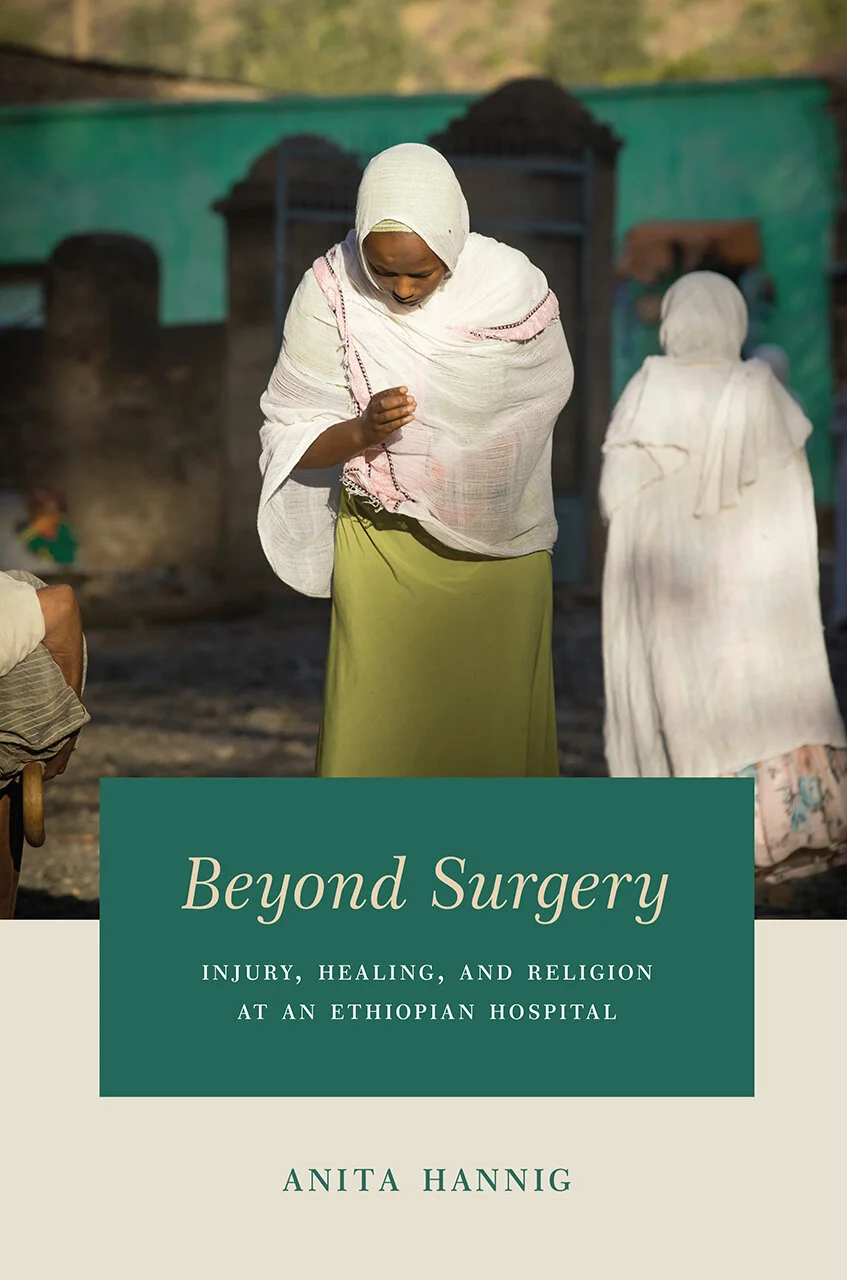
Beyond Surgery: Injury, Healing, and Religion at an Ethiopian Hospital
(The University of Chicago Press, 2017)
By Anita Hannig

( The University of Chicago Press, 2017)
By Anita Hannig
Over the past few decades, maternal childbirth injuries have become a potent symbol of Western biomedical intervention in Africa, affecting over one million women across the global south. Western-funded hospitals have sprung up, offering surgical sutures that ostensibly allow women who suffer from obstetric fistula to return to their communities in full health. Journalists, NGO staff, celebrities, and some physicians have crafted a stock narrative around this injury, depicting afflicted women as victims of a backward culture who have their fortunes dramatically reversed by Western aid. With Beyond Surgery, medical anthropologist Anita Hannig unsettles this picture for the first time and reveals the complicated truth behind the idea of biomedical intervention as quick-fix salvation.
Through her in-depth ethnography of two repair and rehabilitation centers operating in Ethiopia, Hannig takes the reader deep into a world inside hospital walls, where women recount stories of loss and belonging, shame and delight. As she chronicles the lived experiences of fistula patients in clinical treatment, Hannig explores the danger of labeling “culture” the culprit, showing how this common argument ignores the larger problem of insufficient medical access in rural Africa. Beyond Surgery portrays the complex social outcomes of surgery in an effort to deepen our understanding of medical missions in Africa, expose cultural biases, and clear the path toward more effective ways of delivering care to those who need it most.
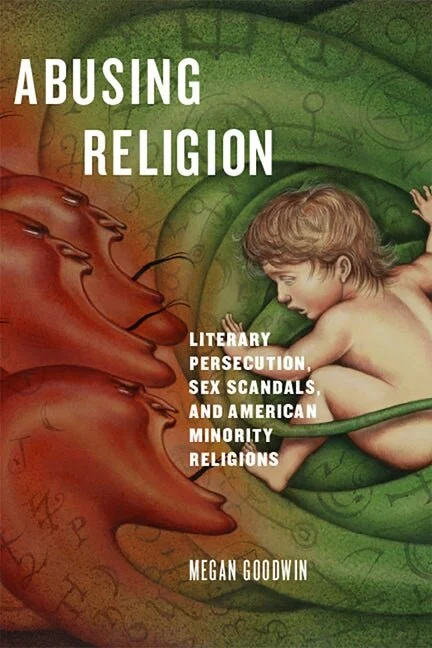
Abusing Religion: Literary Persecution, Sex Scandals, and American Minority Religions
(Rutgers University Press, 2020)
By Megan Goodwin
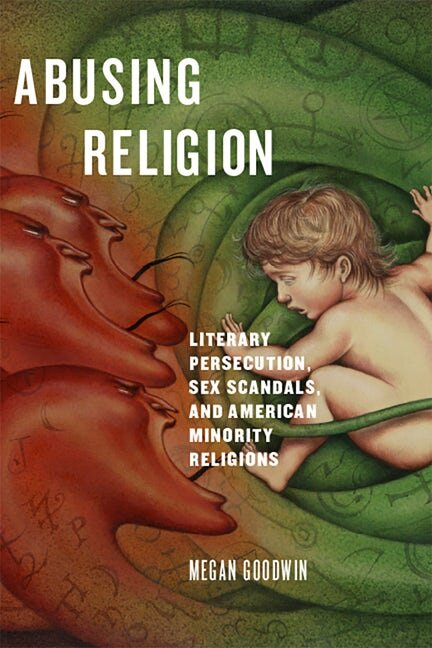
(Rutgers University Press, 2020)
By Megan Goodwin
Sex abuse happens in all communities, but American minority religions often face disproportionate allegations of sexual abuse. Why, in a country that consistently fails to acknowledge—much less address—the sexual abuse of women and children, do American religious outsiders so often face allegations of sexual misconduct? Why does the American public presume to know “what’s really going on” in minority religious communities? Why are sex abuse allegations such an effective way to discredit people on America’s religious margins? What makes Americans so willing, so eager to identify religion as the cause of sex abuse? Abusing Religion argues that sex abuse in minority religious communities is an American problem, not (merely) a religious one.

The Doctor and Mrs. A: Ethics and Counter-Ethics in an Indian Dream Analysis
(Fordham University Press, 2020)
By Sarah Pinto

(Fordham University Press, 2020)
By Sarah Pinto
Just before India’s independence, a young Punjabi woman, ill at ease in her marriage and eager for personal and national freedom, sat down with psychiatrist Dev Satya Nand for an experiment in his new method of dream analysis. The published analysis documents a surge of emotion and reflections on sexuality, gender, marriage, ambition, trauma, and art. “Mrs. A.” (as she is known) turned to female figures from Hindu myth to reimagine her social world and its ethical arrangements, envisioning a future beyond marriage, colonial rule, and gendered constraints.
This book explores the conversation between Mrs. A. and Satya Nand, its window onto gender and sexuality in late colonial Indian society, and the ways Mrs. A. put ethics in motion, creating alternatives to ideals of belonging, recognition, and consciousness. It finds in Mrs. A.’s musings repertoires for the creative transformation of ideals and explores the possibilities of thinking with a dynamic concept of counter-ethics. An unconventional history of gender and sexuality in late colonialism, this book reminds us that the west did not invent feminism, that psychiatry’s history of innovation and creativity is global, and that ethical thinking does not need to center on western myths or paradigms.

Indian Sex Life: Sexuality and the Colonial Origins of Modern Social Thought
(Princeton University Press, 2020)
By Durba Mitra

(Princeton University Press, 2020)
By Durba Mitra
During the colonial period in India, European scholars, British officials, and elite Indian intellectuals—philologists, administrators, doctors, ethnologists, sociologists, and social critics—deployed ideas about sexuality to understand modern Indian society. In Indian Sex Life, Durba Mitra shows how deviant female sexuality, particularly the concept of the prostitute, became foundational to this knowledge project and became the primary way to think and write about Indian society.
Bringing together vast archival materials from diverse disciplines, Mitra reveals that deviant female sexuality was critical to debates about social progress and exclusion, caste domination, marriage, widowhood and inheritance, women’s performance, the trafficking of girls, abortion and infanticide, industrial and domestic labor, indentured servitude, and ideologies about the dangers of Muslim sexuality. British authorities and Indian intellectuals used the concept of the prostitute to argue for the dramatic reorganization of modern Indian society around Hindu monogamy. Mitra demonstrates how the intellectual history of modern social thought is based in a dangerous civilizational logic built on the control and erasure of women’s sexuality. This logic continues to hold sway in present-day South Asia and the postcolonial world.
Reframing the prostitute as a concept, Indian Sex Life overturns long-established notions of how to write the history of modern social thought in colonial India, and opens up new approaches for the global history of sexuality.

A Postcolonial Leadership: Asian Immigrant Christian Leadership and Its Challenges
(State University of New York Press, 2020)
By Choi Hee An

(State University of New York Press, 2020)
By Choi Hee An
Explores the possibilities and challenges of Asian immigrant Christian leadership in the United States.
In A Postcolonial Leadership, Choi Hee An explores the interwoven relationship between Asian immigrant leadership in general and Asian immigrant Christian leadership in the United States. Using several current leadership theories, she analyzes the current landscape of US leadership and explores how Asian immigrant leaders, including Christian leaders, exercise leadership and confront challenges within this context. Drawing upon postcolonial theory and its analysis of power, Choi examines the multilayered dynamics of the Asian immigrant community and Christian congregations in their postcolonial contexts, and offers a new liberative interpretation of colonized history and culture in order to propose postcolonial leadership as a new leadership model for Asian immigrant leaders.

Daughters of Parvati: Women and the Madness in Contemporary India
(University of Pennsylvania Press, 2014)
By Sarah Pinto
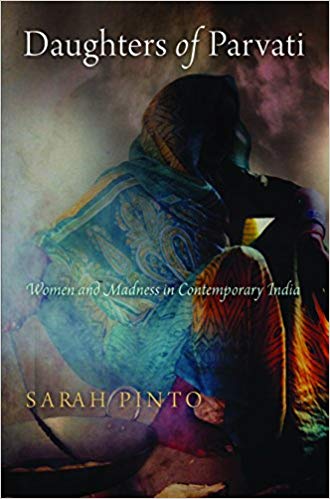
(University of Pennsylvania Press, 2014)
By Sarah Pinto
In her role as devoted wife, the Hindu goddess Parvati is the divine embodiment of viraha, the agony of separation from one's beloved, a form of love that is also intense suffering. These contradictory emotions reflect the overlapping dissolutions of love, family, and mental health explored by Sarah Pinto in this visceral ethnography.
Daughters of Parvati centers on the lives of women in different settings of psychiatric care in northern India, particularly the contrasting environments of a private mental health clinic and a wing of a government hospital. Through an anthropological consideration of modern medicine in a nonwestern setting, Pinto challenges the dominant framework for addressing crises such as long-term involuntary commitment, poor treatment in homes, scarcity of licensed practitioners, heavy use of pharmaceuticals, and the ways psychiatry may reproduce constraining social conditions. Inflected by the author's own experience of separation and single motherhood during her fieldwork, Daughters of Parvati urges us to think about the ways women bear the consequences of the vulnerabilities of love and family in their minds, bodies, and social worlds.

Forever Suspect: Racialized Surveillance of Muslim Americans in the War on Terror (2018)
(Rutgers University Press, 2018)
By Saher Selod

(Rutgers University Press, 2018)
By Saher Selod
The declaration of a “War on Terror” in the aftermath of the September 11, 2001 terrorist attacks brought sweeping changes to the American criminal justice and national security systems, as well as a massive shift in the American public opinion of both individual Muslims and the Islamic religion generally. Since that time, sociologist Saher Selod argues, Muslim Americans have experienced higher levels of racism in their everyday lives. In Forever Suspect, Selod shows how a specific American religious identity has acquired racial meanings, resulting in the hyper surveillance of Muslim citizens. Drawing on forty-eight in-depth interviews with South Asian and Arab Muslim Americans, she investigates how Muslim Americans are subjected to racialized surveillance in both an institutional context by the state and a social context by their neighbors and co-workers. Forever Suspect underscores how this newly racialized religious identity changes the social location of Arabs and South Asians on the racial hierarchy further away from whiteness and compromises their status as American citizens.

Shariah: What Everyone Needs to Know
(Oxford University Press, 2018)
By John L. Esposito and Natana J. DeLong-Bas

(Oxford University Press, 2018)
By John L. Esposito and Natana J. DeLong-Bas
Most Americans and Europeans have by now heard of Shariah. In the West, politicians, media commentators, televangelists, and others have stoked fears that Muslims intend to impose a repressive rule based on Shariah in America and Europe. Shariah has been portrayed as a medieval system that oppresses women, stifles human rights, and imposes harsh punishments like stoning and amputation. In reality, however, Shariah is a complex concept that has been interpreted in many ways over time and around the world. It plays a vital role in the lives of Muslims around the world, offering guidance on everything from personal morality to ritual practices, family life, and finance.
In this timely addition to Oxford's What Everyone Needs to Know® series, John Esposito and Natana DeLong-Bas offer an accessible and thorough guide to this little-understood, but often caricatured system. The book provides clear and even-handed answers to a wide range of questions, covering the history, development, content, and practice of Shariah. What are its origins? What is a Shariah court and how does it work? How does a person become a Muslim in the eyes of Islamic law? Does Islamic law allow Muslims to marry non-Muslims? What are blasphemy laws, and how are they enforced? How does Islamic law govern trade and contracts of sale? Do Muslims in the West want Shariah Law? Is there a need to protect American and European societies from the imposition of Shariah?
By answering the questions that so many people have about Shariah and its role in Muslim life, this book makes an invaluable contribution to the crucial task of fostering mutual understanding in our globalizing, pluralistic societies.

Jewish Radical Feminism: Voices from the Women’s Liberation Movement
(NYU Press, 2018)
By Joyce Antler

(NYU Press, 2018)
By Joyce Antler
Jewish women were undeniably instrumental in shaping the women’s liberation movement of the 1960s, 70s, and 80s. Yet historians and participants themselves have overlooked their contributions as Jews. This has left many vital questions unasked and unanswered—until now. Delving into archival sources and conducting extensive interviews with these fierce pioneers, Joyce Antler has at last broken the silence about the confluence of feminism and Jewish identity.
Antler’s exhilarating new book features dozens of compelling biographical narratives that reveal the struggles and achievements of Jewish radical feminists in Chicago, New York and Boston, as well as those who participated in the later, self-consciously identified Jewish feminist movement that fought gender inequities in Jewish religious and secular life. Disproportionately represented in the movement, Jewish women’s liberationists helped to provide theories and models for radical action that were used throughout the United States and abroad. Their articles and books became classics of the movement and led to new initiatives in academia, politics, and grassroots organizing. Other Jewish-identified feminists brought the women’s movement to the Jewish mainstream and Jewish feminism to the Left. For many of these women, feminism in fact served as a “portal” into Judaism.
Recovering this deeply hidden history, Jewish Radical Feminismplaces Jewish women’s activism at the center of feminist and Jewish narratives. The stories of over forty women’s liberationists and identified Jewish feminists—from Shulamith Firestone and Susan Brownmiller to Rabbis Laura Geller and Rebecca Alpert—illustrate how women’s liberation and Jewish feminism unfolded over the course of the lives of an extraordinary cohort of women, profoundly influencing the social, political, and religious revolutions of our era.

A Postcolonial Self: Korean Immigrant Theology and Church
(SUNY Press, 2015)
By Choi Hee An

(SUNY Press, 2015)
By Choi Hee An
Theologian Choi Hee An explores how Korean immigrants create a new, postcolonial identity in response to life in the United States. A Postcolonial Self begins with a discussion of a Korean ethnic self (“Woori” or “we”) and how it differs from Western norms. Choi then looks at the independent self, the theological debates over this concept, and the impact of racism, sexism, classism, and postcolonialism on the formation of this self. She concludes with a look at how Korean immigrants, especially immigrant women, cope with the transition to US culture, including prejudice and discrimination, and the role the Korean immigrant church plays in this. Choi posits that an emergent postcolonial self can be characterized as “I and We with Others.” In Korean immigrant theology and church, an extension of this can be characterized as “radical hospitality,” a concept that challenges both immigrants and American society to consider a new mutuality.

After the Wrath of God: AIDS, Sexuality, & American Religion
(Oxford University Press, 2015)
By Anthony M. Petro

(Oxford University Press, 2015)
By Anthony M. Petro
On a cold February morning in 1987, amidst freezing rain and driving winds, a group of protesters stood outside of the Unitarian Universalist Church in Amherst, Massachusetts. The target of their protest was the minister inside, who was handing out condoms to his congregation while delivering a sermon about AIDS, dramatizing the need for the church to confront the seemingly ever-expanding crisis. The minister's words and actions were met with a standing ovation from the overflowing audience, but he could not linger to enjoy their applause. Having received threats in advance of the service, he dashed out of the sanctuary immediately upon finishing his sermon. Such was the climate for religious AIDS activism in the 1980s.
In After the Wrath of God, Anthony Petro vividly narrates the religious history of AIDS in America. Delving into the culture wars over sex, morality, and the future of the American nation, he demonstrates how religious leaders and AIDS activists have shaped debates over sexual morality and public health from the 1980s to the present day. While most attention to religion and AIDS foregrounds the role of the Religious Right, Petro takes a much broader view, encompassing the range of mainline Protestant, evangelical, and Catholic groups--alongside AIDS activist organizations--that shaped public discussions of AIDS prevention and care in the U.S. Petro analyzes how the AIDS crisis prompted American Christians across denominations and political persuasions to speak publicly about sexuality--especially homosexuality--and to foster a moral discourse on sex that spoke not only to personal concerns but to anxieties about the health of the nation. He reveals how the epidemic increased efforts to advance a moral agenda regarding the health benefits of abstinence and monogamy, a legacy glimpsed as much in the traction gained by abstinence education campaigns as in the more recent cultural purchase of gay marriage.
The first book to detail the history of religion and the AIDS epidemic in the U.S., After the Wrath of God is essential reading for anyone concerned with the intersection of religion and public health.