

Women, Power, and Property: The Paradox of Gender Equality Laws in India
(Cambridge University Press, 2020)
By Rachel E. Brulé

(Cambridge University Press, 2020)
By Rachel E. Brulé
Quotas for women in government have swept the globe. Yet we know little about their capacity to upend entrenched social, political, and economic hierarchies. Women, Power, and Property explores this question within the context of India, the world's largest democracy. Brulé employs a research design that maximizes causal inference alongside extensive field research to explain the relationship between political representation, backlash, and economic empowerment. Her findings show that women in government – gatekeepers – catalyze access to fundamental economic rights to property. Women in politics have the power to support constituent rights at critical junctures, such as marriage negotiations, when they can strike integrative solutions to intrahousehold bargaining. Yet there is a paradox: quotas are essential for enforcement of rights, but they generate backlash against women who gain rights without bargaining leverage. In this groundbreaking study, Brulé shows how well-designed quotas can operate as a crucial tool to foster equality and benefit the women they are meant to empower.

Research Handbook on Human Rights and Poverty
(Elgar, 2021)
By Martha Davis

(Elgar, 2021)
By Martha Davis
This important Research Handbook explores the nexus between human rights, poverty and inequality as a critical lens for understanding and addressing key challenges of the coming decades, including the objectives set out in the Sustainable Development Goals. The Research Handbook starts from the premise that poverty is not solely an issue of minimum income and explores the profound ways that deprivation and distributive inequality of power and capability relate to economic, social, cultural, civil and political rights.
Leading experts in the human rights field representing a range of disciplines outline a future research agenda to address poverty and inequality head on. Beginning with an interrogation of the definition of poverty, subsequent chapters analyse the dynamics of poverty and inequality in relation to matters such as race, gender, age, disability, sexual orientation, geography and migration status. The rights to housing, land, health, work, education, protest and access to justice are also explored, with a recognition of the challenges posed by corruption, climate change and new technologies.
The Research Handbook on Human Rights and Poverty is an essential reference guide for those who teach in these areas and for scholars and students developing future research agendas of their own. This will also be a much-needed resource for people working practically to address poverty in both the Global North and Global South.

Economic and Social Rights in a Neoliberal World
(Columbia University Press, 2018)
Edited By Gillian MacNaughton and Diane F. Frey

(Cambridge University Press, 2019)
Edited By Gillian MacNaughton and Diane F. Frey
The rise of neoliberal policy and practice simultaneous to the growing recognition of economic and social rights presents a puzzle. Can the rights to food, water, health education, decent work, social security and the benefits of science prevail against market fundamentalism? Economic and Social Rights in a Neoliberal World is about the potential of these rights to contest the adverse impacts of neoliberal policy and practice on human wellbeing. Cutting across several lines of human rights literature, the chapters address norm development, court decision making, policymaking, advocacy, measurement and social mobilization. The analyses reveal that neoliberalism infiltrates management practices, changes international policy goals, flattens public school curriculum and distorts the outputs of UN human rights treaty bodies. Are economic and social rights successful in challenging neoliberalism, are they simply marginalized or are they co-opted and incorporated into neoliberal frameworks? This multidisciplinary work by a geographically diverse group of scholars and practitioners begins to address these questions.

Shaping the Future of African American Film: Color-Coded Economics and the Story Behind the Numbers
(Rutgers University Press, 2014)
By Monica Ndounou

(Rutgers University Press, 2014)
By Monica White Ndounou
In Hollywood, we hear, it’s all about the money. It’s a ready explanation for why so few black films get made—no crossover appeal, no promise of a big payoff. But what if the money itself is color-coded? What if the economics that governs film production is so skewed that no film by, about, or for people of color will ever look like a worthy investment unless it follows specific racial or gender patterns? This, Monica Ndounou shows us, is precisely the case. In a work as revealing about the culture of filmmaking as it is about the distorted economics of African American film, Ndounou clearly traces the insidious connections between history, content, and cash in black films.
How does history come into it? Hollywood’s reliance on past performance as a measure of potential success virtually guarantees that historically underrepresented, underfunded, and undersold African American films devalue the future prospects of black films. So the cycle continues as it has for nearly a century. Behind the scenes, the numbers are far from neutral. Analyzing the onscreen narratives and off-screen circumstances behind nearly two thousand films featuring African Americans in leading and supporting roles, including such recent productions as Bamboozled, Beloved, and Tyler Perry’s Diary of a Mad Black Woman, Ndounou exposes the cultural and racial constraints that limit not just the production but also the expression and creative freedom of black films. Her wide-ranging analysis reaches into questions of literature, language, speech and dialect, film images and narrative, acting, theater and film business practices, production history and financing, and organizational history.
By uncovering the ideology behind profit-driven industry practices that reshape narratives by, about, and for people of color, this provocative work brings to light existing limitations—and possibilities for reworking stories and business practices in theater, literature, and film.

Gender and Risk-Taking: Economics, Evidence, and Why the Answer Matters
(Routledge, 2017)
By Julie A. Nelson

(Routledge, 2017)
By Julie A. Nelson
The belief that men and women have fundamentally distinct natures, resulting in divergent preferences and behaviours, is widespread. Recently, economists have also engaged in the search for gender differences, with a number claiming to find fundamental gender differences regarding risk-taking, altruism, and competition. In particular, the idea that "women are more risk-averse than men" has become accepted as a truism. But is it true? And what are its causes and consequences?
Gender and Risk Taking makes three contributions. First, it asks whether the belief that men and women have distinct risk preferences is backed up by high quality empirical evidence. The answer turns out to be "no." This leads to a second question: Why, then, does so much of the literature claim to find evidence of "difference"? This, it will be shown, can be attributed to biases arising from too-easy categorical thinking, widespread stereotyping, and a tendency to prefer results that are publishable and that fit one’s prior beliefs. Third, the book explores the economic implications of the conventional association of risk-taking with masculinity and risk-aversion with femininity. Not only fairness in employment, but also the health of the financial sector and national responses to climate change, this book argues, are being compromised.
This volume will be eye-opening for anyone interested in gender, decision-making, cognition, and/or risk, especially in areas relating to employment, finance, management, or public policy.
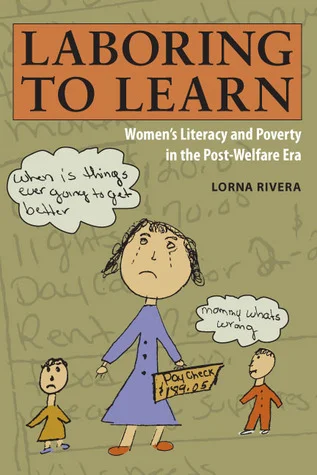
Laboring to Learn: Women's Literacy and Poverty in the Post-Welfare Era
(University of Illinois Press, 2008)
By Lorna Rivera
(University of Illinois Press, 2008)
By Lorna Rivera

The American adult education system has become an alternative for school dropouts, with some state welfare policies requiring teen mothers and women without high school diplomas to participate in adult education programs to receive aid. Very little has been published about women’s experiences in these mandatory programs and whether the programs reproduce the conditions that forced women to drop out in the first place. Lorna Rivera bridges the gap with this important study, the product of ten years’ active ethnographic research with formerly homeless women who participated in adult literacy education classes before and after welfare reform. Analyzing the web of ideological contradictions regarding “work first” welfare reform policies, Rivera argues that poverty is produced and reproduced when women with low literacy skills are pushed into welfare-to-work programs and denied education.