
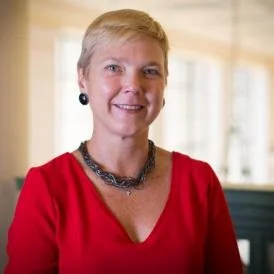
Linda Griffith
School of Engineering Teaching Innovation Professor of Biological and Mechanical Engineering and MacVicar Fellow, MIT
Specializations:
Integration of Tissue Engineering and Systems Biology
Functional Biomaterials
Drug Development
Course idea:
A few studies have shown that women miss more work than men because they themselves are ill, not just because they are taking care of sick family members. I am very plugged in to the medical side and epidemiological side of gynecology disorders, as well as diseases that skew female (eg most autoimmune diseases, many chronic inflammatory diseases). I wish there were more intensity in the area of how the cumulative morbidity of health disorders impacts women's educational and professional development, and would very much like to partner with someone with expertise in the social/work side.
Search the Faculty Listings:

Nicole Noll
Lecturer, Studies of Women, Gender, and Sexuality, Harvard

Specializations:
Embodiment of gender and other culturally- and historically-situated social categories
Gender/sex-essentialist beliefs and their implications
Social psychology, especially automatic social cognition
Course idea:
I would be interested in co-developing a course on the embodiment of gender (and/or sexuality), contributing a social psychological perspective. I would also be open to building a course that examined intersectionality in the context of social science research.
Search the Faculty Listings:
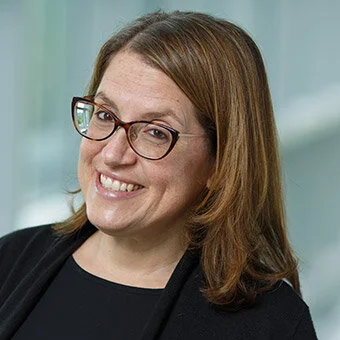
Sara Shostak
Associate Professor, Sociology, Brandeis University

Specializations:
Sociology of health and illness
Science and technology studies
Environmental health and justice
Food studies
Qualitative research methods
Course idea:
None specified
I'm a medical sociologist, committed to understanding the social production of health and illness across diverse contexts. My research focuses on how a wide variety of actors – scientists and farmers, health policy makers and city planners, people living with illness and people working to help their communities heal from trauma – perceive and experience the material conditions that shape health inequities in the United States.
Search the Faculty Listings:
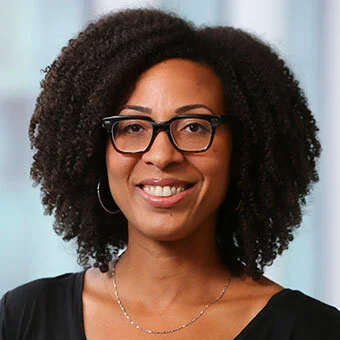


Jocelyn Viterna
Professor, Sociology, Harvard University

Specializations:
Sociology, Reproductive Justice
Reproductive Health
Gender and Politics
Criminalization of Sexuality and Reproduction
Implicit/Explicit Gender Bias in the Judicial System
Gender-based Violence
Gender and War
Latin America
Course idea:
None specified
Search the Faculty Listings:

Chris A Barcelos
Assistant Professor of Women’s, Gender, and Sexuality Studies, UMass Boston
Associate Professor of Women's, Gender, and Sexuality Studies

Specializations:
Critical public health
Sexualities studies
Queer of color critique
Transgender studies
Youth
Course idea:
none specified
Search the Faculty Listings:

Alisa Bokulich
Professor, Philosophy of Science, Boston University

Specializations:
Philosophy of Science
Science, Technology & Values
Course idea:
Gender, Race, and Science
Alisa Bokulich received her Ph.D. from the University of Notre Dame’s Program in History and Philosophy of Science. She is the director of the Center for Philosophy & History of Science at BU (since 2010), where she also organizes the Boston Colloquium for Philosophy of Science.
Professor Bokulich is also an Associate Member of Harvard University’s History of Science Department. She has been the recipient of several grants from the National Science Foundation. She is currently working on a book on philosophical issues in the Earth Sciences.
Professor Bokulich’s teaching at Boston University includes courses in the philosophy of science; philosophy of physics; gender, race and science; and science, technology, and values.
Search the Faculty Listings:

Branden Fitelson
Research Scientist, Division of Adolescent/Young Adult Medicine, Boston Children’s Hospital and Instructor, Department of Pediatrics, Harvard Medical School

Specializations:
Logic
Epistemology
Cognitive science
Course idea:
None specified
Before teaching at Northeastern, Branden held teaching positions at Rutgers, UC-Berkeley, San José State, and Stanford and visiting positions at the Munich Center for Mathematical Philosophy at LMU-Munich (MCMP @ LMU) and the Institute for Logic, Language and Computation at the University of Amsterdam (ILLC @ UvA). Branden got his MA and PhD in philosophy from UW-Madison. Before entering philosophy, Branden studied math and physics at Wisconsin, and he worked as a research scientist at Argonne National Laboratory and a NASA contractor.
Search the Faculty Listings:

Kathrin Zippel
Associate Professor of Sociology, Northeastern University

Specializations:
Gender
Work and Organizations
Gender Equity Politics
Science
Course idea:
None specified
Kathrin Zippel has published on gender politics in the workplace, public and social policy, social movements, welfare states, and globalization in the United States and Europe. Her book, The Politics of Sexual Harassment in the United States, the European Union and Germany, (Cambridge University Press) won several awards.
Her current research explores gender and global transformations of science and education. In her book, Women in Global Science: Advancing Careers Through International Collaboration (Stanford University Press), she argues that global science is the new frontier for women, providing both opportunities and challenges as gender shapes the dynamics and practices of international research. She directs a NSF- funded interdisciplinary network analysis to study the diffusion of ideas on gender equity interventions among U.S. Universities.
Zippel is a co-chair of the Social Exclusion and Inclusion Seminar at the Minda de Gunzburg Center for European Studies Harvard University and was a residential fellow at the Women and Public Policy Program at the Harvard Kennedy School. She served as co-PI of Northeastern’s National Science Foundation ADVANCE Institutional Transformation grant. She held a Humboldt Research fellowship at the Max Planck Institute for the Study of Societies in Cologne and the Ludwig-Maximilians-University in Munich; was a guest at Radboud University, Nijmegen, the WZB Social Science Research Center in Berlin, and the European University Institute in Florence. Zippel received a Ph.D. from the University of Wisconsin-Madison, and was a post-doc at the European Union Center of New York at Columbia University.