

Liberatory Practices for Worlds in Crisis
This conference invites graduate student scholars, activists, and practitioners to examine what it means and has meant to survive in a world in crisis. What do we mean by crisis? How do historical experiences of crisis inform our understanding of present crises? What is the meaning and purpose of “liberatory practices” in the historical and contemporary world? How do Indigenous, feminist, queer, trans, disability or other lenses offer alternative understandings of crisis? What world is possible after a crisis? By exploring these and more questions, we hope to consider how new methods of study and care practices in our scholarship might allow us to imagine different worlds, develop resilience in a crisis-laden world, become “undisciplined” academically, and/or form more caring and collaborative communities.

Liberating Temporality and Spatiality
Time and space, while often seen as linear and confined concepts, can be stretched, altered, and reconfigured. We move through time and space in fits & bursts; some ways of moving and being are deemed normative or “good” and brought to the forefront, while others might be marginalized and cast aside. Here, we instead cast aside normative ideas of time and and space to focus on how liberating the concepts of temporality and spatiality can help us imagine and create new futures, communities, and ways of being. This conference seeks to look at liberatory conceptions of spatiality and temporality, particularly in the contexts of racial justice, abolition, disability rights, queer/trans ecologies, human development, death studies and practices, embodiment, community building, and more.

Radical Love across Difference
By using a praxis of love to highlight the struggles toward liberation, we approach what hooks suggests is a culture of refusing systems of domination. The importance of expressing, maintaining, and transforming radical love, especially across differences, is more pressing than ever. This conference seeks to explore the role radical love plays in health crises, climate change, racial justice, migration, economic justice and further social justice movements through community and belonging, pedagogy and literacy, creative expression and storytelling, virtual life and presence, and further fields

Interrogating Self-Care: Bodies, Personhood, & Movements in Tumultuous Times
In her 1988 book A Burst of Light, Audre Lorde said, “Caring for myself is not self-indulgence, it is self-preservation and that is an act of political warfare.” The concept of self-care, which arose through the activist practices specifically of marginalized groups, has been increasingly adopted and discussed by health care settings, non-profit organizations, commercial and marketing enterprises, and psychological approaches.
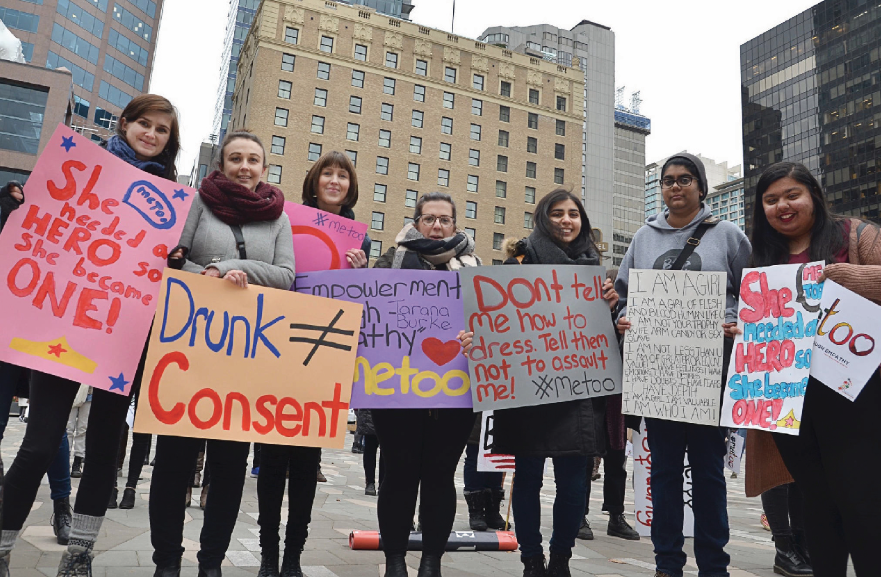
Half-Day Conference: Higher Ed in the Era of #MeToo
Join us for a free half day conference at MIT on how the recent #MeToo movement has impacted higher education, specifically at the graduate level.

The Personal is Still Political: Challenging Marginalization Through Theory Analysis & Praxis
In the late 1960s, the statement “the personal is political” emerged as a central rallying cry for feminist activists. While salient before, it has become all the more urgent in light of the 2016 United States election results. Given this, our conference seeks to investigate how this slogan has been, can be, or is now being mobilized as a concept for resistance by marginalized groups theoretically, analytically, and practically.

Power & (In)Visibility
The graduate students from nine universities of the Boston-area Graduate Consortium in Women's Studies present an interdisciplinary graduate student symposium entitled "Power and (In)Visibility," to be held at MIT on Saturday, March 28, 2015.

Clash Zones: Identities in (R)evolution
The Graduate Consortium in Women’s Studies and graduate students from our nine member institutions present biannual interdisciplinary conference entitled:
Clash Zones: Identities in (R)evolution

This interdisciplinary Women’s and Gender studies will investigate how frictions produced in these “clash zones” impact individual and communal bodies and alter the identity categories by which we define those bodies. We invite presentations from any discipline or period to explore how contentious cultural spaces shape gender and sexuality, both historically and today.
Categories of interest may include, but are not limited to:
Labor borders: separate spheres, class divisions, wealth/pay equality
Political borders: uprisings, warfare, revolutions, protest
Environmental borders: lands of ecological concern, the natural world
National borders: citizenship, immigration, diaspora, post/colonialism
Urban borders: socioeconomic divisions, cultural spaces, public vs. private
Community borders: online/virtual, alternative, and imagines communities; subcultures
Body borders: transgender; intersex, queer bodies; reproductive technologies
Who's Laughing? The Politics of Humor
GCWS Student Conference 2008
Jokes, satire, parody, and comedic performance can be powerful tools for challenging the status quo or for conforming to it. They have the potential to transform discourse, yet it is in these forms that our most troubling and violently disfiguring assumptions about gender, race, class, and sexual orientation can find their longest life. "Humor" can both enable and disable speech; it is available to some and prohibited for others.
Beyond Revolution or Behind It? The Politics and Practice of Contemporary Feminism across Academic and Activist Communities
GCWS Student Conference 2007
Theories of race, multiculturalism, Marxism, postcolonialism, and feminism ground work in Women's and Gender Studies – we will consider what realities these theories address (or ignore), what praxis they strengthen (or fail to), what communities they reach, and which they may leave behind. Is the grassroots and activist sentiment inspiring these concepts trumped by the theoretical vocabulary used to describe them? Do the pressures of academies and institutions limit the execution of diverse expressions of feminism in the classroom and on the ground?
Shifting Gender Identities in the face of War, Globalization, and Natural Disaster
GCWS Student Conference 2006
What does this mean in an age we have come to call 'globalized,' in which the flow of information, labor, goods, and bodies takes place with unprecedented speed and in ever-shifting patterns? And in the context of women's, gender, and queer studies, what does it mean for women, gays, lesbians, bisexuals, transgender persons, and anyone else who stands outside or astride the boundaries of conventional gender/sexual norms?