
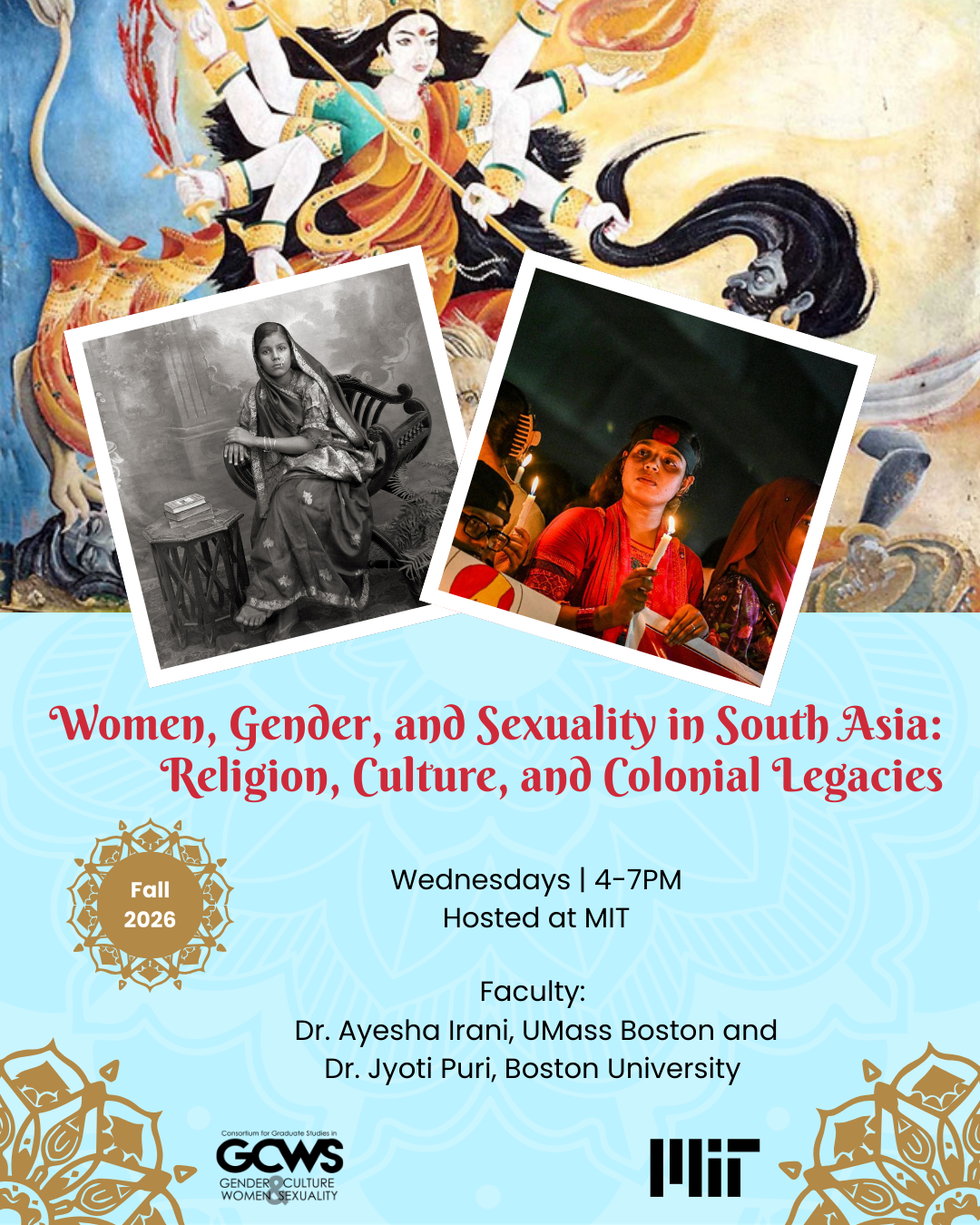
Fall 2026, Wednesdays, 4-7PM; Meets at MIT
This course examines women, gender and sexuality in South Asian history through the lenses of religion, colonialism, and postcolonial culture. Using historical, literary, sociological, and anthropological lenses the course will consider how various institutions of authority—patriarchy, religion, and the state—have shaped and continue to reshape gender and sexuality in South Asia, and how women and other subalterns, in turn, resisted, interpreted and negotiated their position in society. Women and other subalterns continue to be a sign of South Asia’s “backwardness,” but serve simultaneously as a symbolic upon which ideas of modernity are debated. Thus, how women, gender and sexuality are imagined is often at the core of how nation and collective identities are defined and desired in South Asia.
Adopting a thematic and theoretical approach built on examples from literature, film, religious scripture, theological commentaries, and colonial history, this course will explore the following themes: the representation of women in religious texts; the comparative constructions of women and their roles across South Asian cultural traditions; women and the caste system; reformism in the colonial period and its impact on women; the goddess traditions, and the question of political and social empowerment; gender segregation; conceptions of masculinity, male honor and female chastity; Hijras, queer and trans subjects; nationalism and state violence; and issues of violence and resistance in contemporary times.
Faculty

Ayesha Irani is Assistant Professor of Asian Studies at the University of Massachusetts-Boston. Her forthcoming monograph, The Muhammad Avatāra: Salvation History, Translation and the Making of Bengali Islam, examines the role of vernacular translation in the Islamization of Bengal.
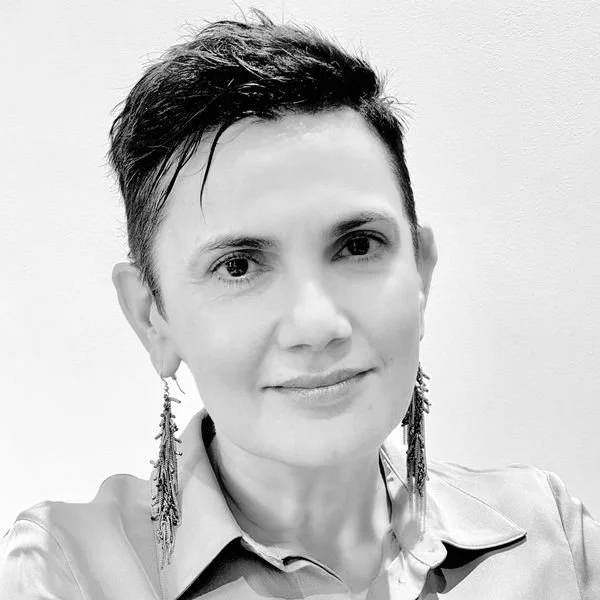
Jyoti Puri is a Professor of Sociology at Boston University. Puri is a feminist sociologist whose research and teaching are enriched by the intersections of sociology, sexuality and queer studies, critical death studies, and postcolonial, decolonial, and anticolonial theories. Her work primarily focuses on the structural and institutional forms of regulation from the perspectives of marginalized subjects. Through her books and numerous essays, she explores how states and nations govern bodies, genders, sexualities, and death; examines the transnational aspects of governance shaped by colonial histories and postcolonial legacies; and strives to decenter Eurocentric theory and perspectives.