
FEMINIST AND QUEER METHODS
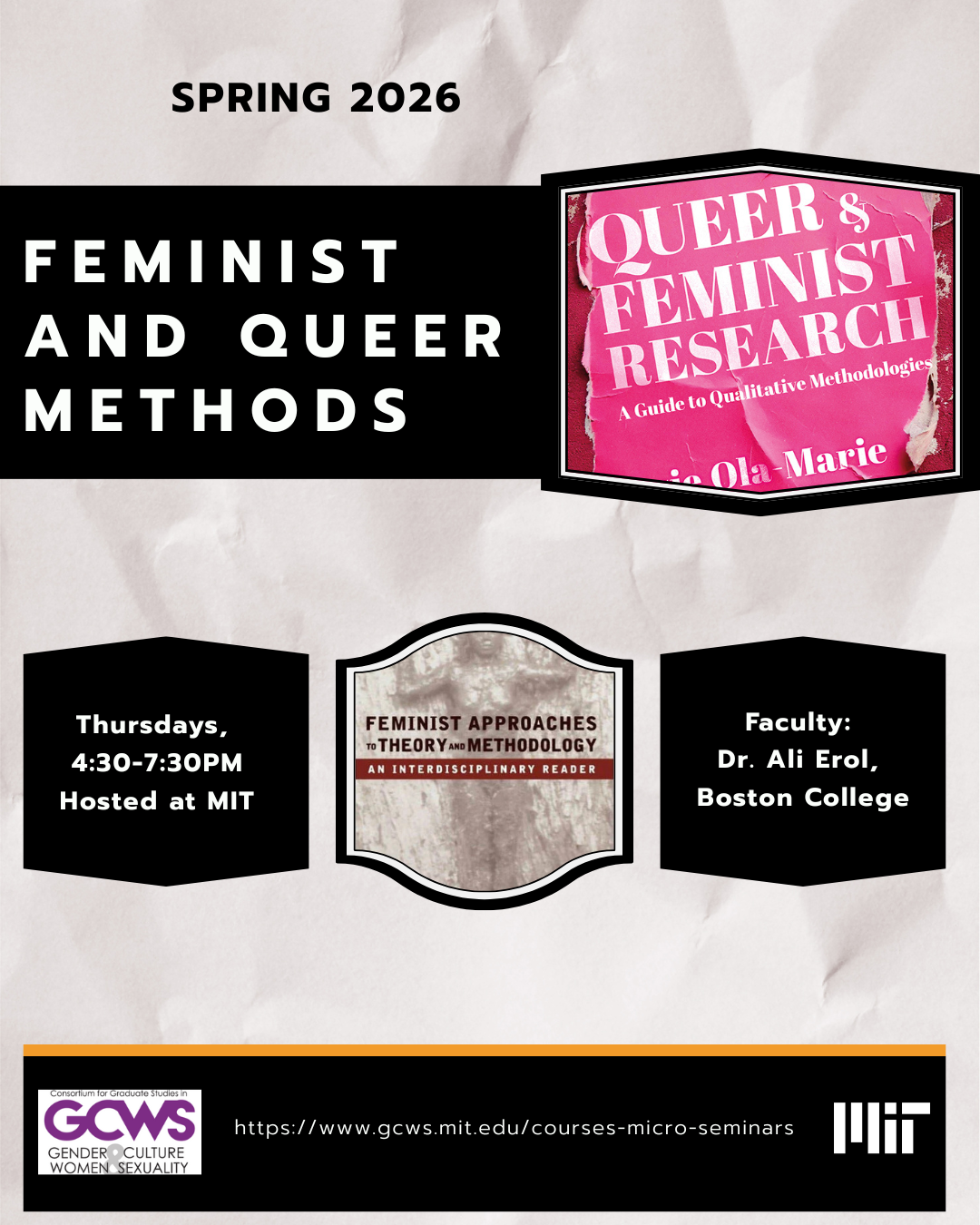
Spring 2026, Thursdays, 4:30-7:30PM; Meets at MIT
The purpose of doing academic research broadly revolves around knowledge production and includes steps such as hypothesizing, data coding, analyzing, connecting it to the literature, arguing with the arguments in the literature and producing charts and measuring impact and so on. Such steps usually expressed in the language borrowed from the supposedly objective natural sciences might create the impression that the way we approach knowledge production, the knowledge we produce, and the tools we use to produce knowledge with are free of political bias or they are immune from reproducing cultural or epistemic violence. Unfortunately, this is not the case.
The purpose of this course is twofold. First, we will learn to interrogate this supposedly objective process of knowledge production and the produced knowledge from the perspective of feminist and queer epistemologies and theories. Second, we will learn the ways in which we can produce knowledge based and grounded in feminist and queer epistemologies. In addition, we will practice paying close attention to locating ourselves and any research in the history of knowledge production and especially how the produced knowledge and process itself contributes to or challenges existing power structures or structures of violence in society.
FACULTY
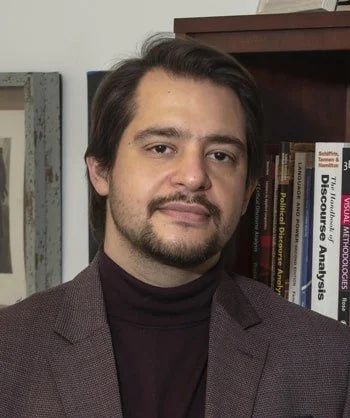
Ali E. Erol is an associate professor of the practice in the Department of Communication, teaching courses related to intercultural communication, gender & sexuality, consumerism & capitalism, digital gaming, and research methods.
Dr. Erol’s research covers various areas of interest. His current book project is an introduction to the field of Intercultural Communication from a critical perspective.
His first book, “LGBTQ Activism in Turkey During 2010s: Queer Talkback” (Palgrave, 2021) investigated how LGBTQ activists in Turkey endured the increasing social, legal, and cultural pressures through three case studies: Gezi Park Protests in 2013, Pride Parade Ban in Istanbul in 2016, and the indefinite ban on LGBTQ events in Ankara in 2017.
Erol received his Ph.D. in intercultural communication from Howard University, where he won the National Communication Association’s Dissertation Honors Program and Graduate Symposium Prize in Arts and Humanities. He holds a B.A in philosophy and international politics from Penn State University, and an M.A. in conflict analysis and resolution from George Mason University, where he was trained as a mediator.