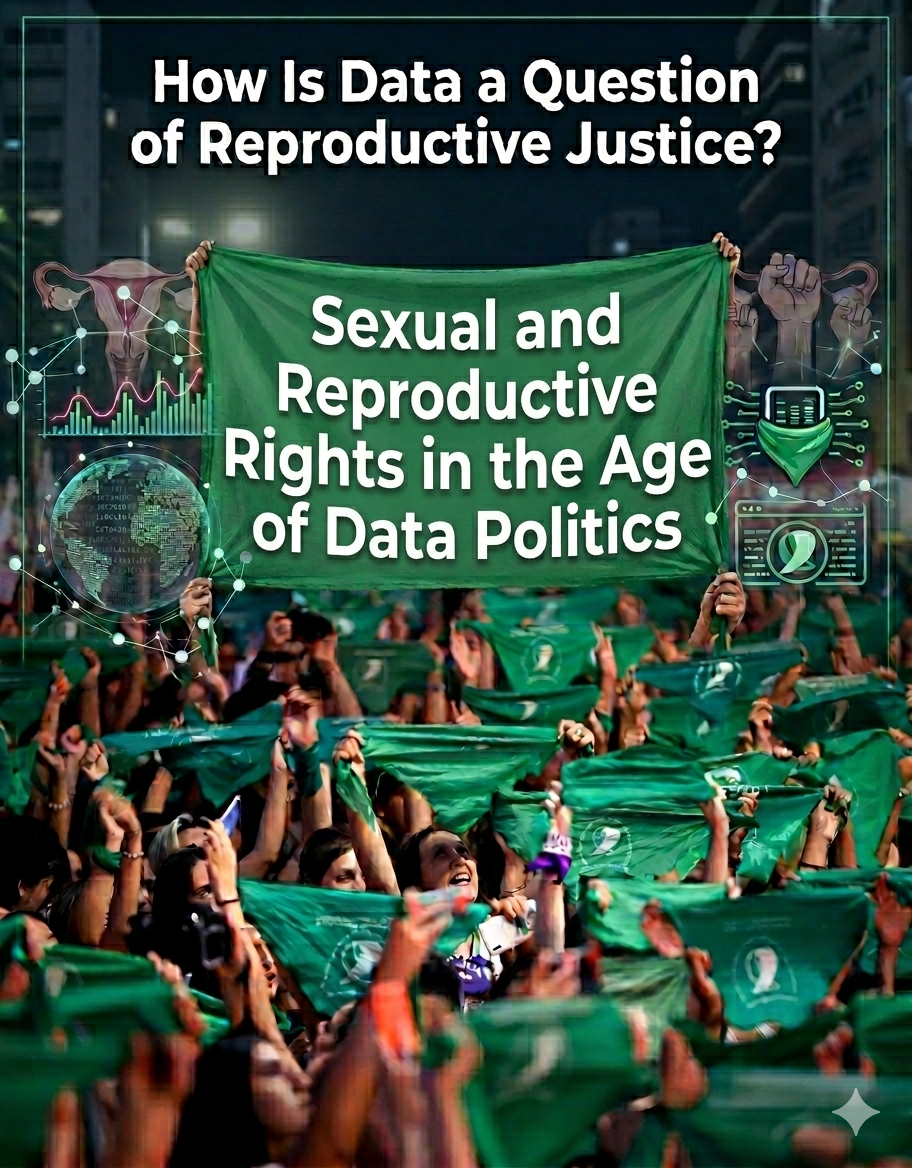
How Is Data a Question of Reproductive Justice? Sexual and Reproductive Rights in the Age of Data Politics
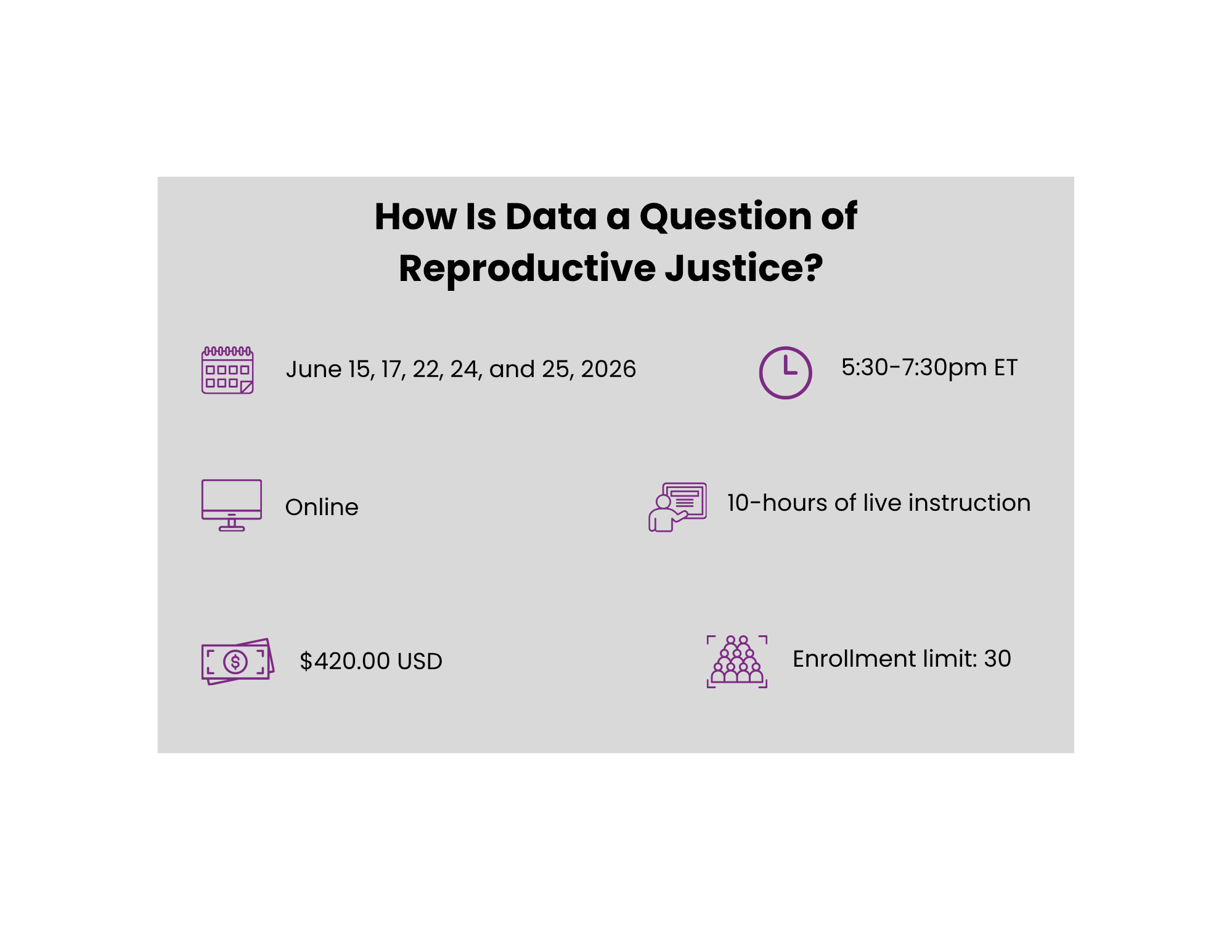
$420.00
Session dates: June 15, 17, 22, 24, and 25, 2026
Overview
In Latin America, some of the world's most conservative countries in relation to sexual and reproductive rights have made strides toward reproductive justice. The emergence of the Green Tide—a transnational movement for legal, safe, and free abortion that began in Argentina—contributed to the legalization of abortion in Argentina (2020) and Colombia (2022), as well as a 2023 federal ruling decriminalizing abortion in Mexico. How did that happen, and what role did data play? This micro-course explores the connection between data politics and struggles for reproductive rights and justice.
We live in a datafied age, where data is power and reproductive rights are no exception. In 2022, the Latin American and Caribbean Network of Catholics for the Right to Choose surveyed 6,037 people across six countries to fill a glaring gap: the near-total absence of Catholic public opinion data on abortion. Their campaign, Woman, Your Will Be Done, transformed those findings into reports, videos, and advocacy materials, reframing abortion as a public health issue rather than a moral one. Launched on September 28, the regional day for abortion decriminalization, the campaign shows how producing data is a form of political action. In Latin America, this is not an isolated happening. Activists, governments, and conservative organizations know this, and they're all using data to fight for (or against) reproductive rights. Drawing on cases from Latin America's Green Tide movement and anti-abortion organizations, this course shows how data is produced, mobilized, and contested to shape public opinion, policy, and collective action.
We will discuss concepts like "data activism," "missing data," "counterdata production," and "transnational data activism" as practical tools for understanding the world around us. We will also see how far-right and conservative actors have adopted data-driven tactics to roll back reproductive rights gains, and what movements can do in response.
Whether you're an activist, researcher, student, or simply someone who cares about reproductive justice, gender-related rights, or how technology shapes our lives, this course will give you a feminist perspective for understanding and acting in one of today's most contested public disputes.
What You Will Learn
By the end of this micro-course, students will be able to:
Apply feminist data activism frameworks to real-world cases in Latin America to explain how movements like the Green Tide used data to win policy change.
Use the concepts of missing data and counterdata production to evaluate how reproductive rights advocates challenge dominant narratives with their own evidence.
Map the tactics that conservative and far-right organizations use to mobilize data against reproductive rights to recognize and counter these strategies in your own context.
Design a basic data activism strategy by drawing on transnational examples.
Critically assess the opportunities and risks of datafied strategies for social justice movements, so you can make informed decisions about if, when, and how to use them.
Meet the Faculty

Alessandra Jungs de Almeida
Alessandra Jungs de Almeida is a Brazilian researcher, professor, and feminist whose practice and work are focused on sexual and reproductive rights and gender-based violence in Latin America. She is a research affiliate at the Data + Feminism Lab (MIT) and at the Center for Gender Studies in Foreign Policy and International Politics (NEGPEI–UFSC). She is a collaborator in the Data Against Feminicide project. She holds a PhD in International Relations from the Federal University of Santa Catarina (UFSC), Brazil, with a two-year doctoral period (2022-2024) at the Massachusetts Institute of Technology (MIT). She adopts an interdisciplinary approach that bridges International Relations, Critical Data Studies, and Feminist and Gender Studies.
MIT and Simmons University