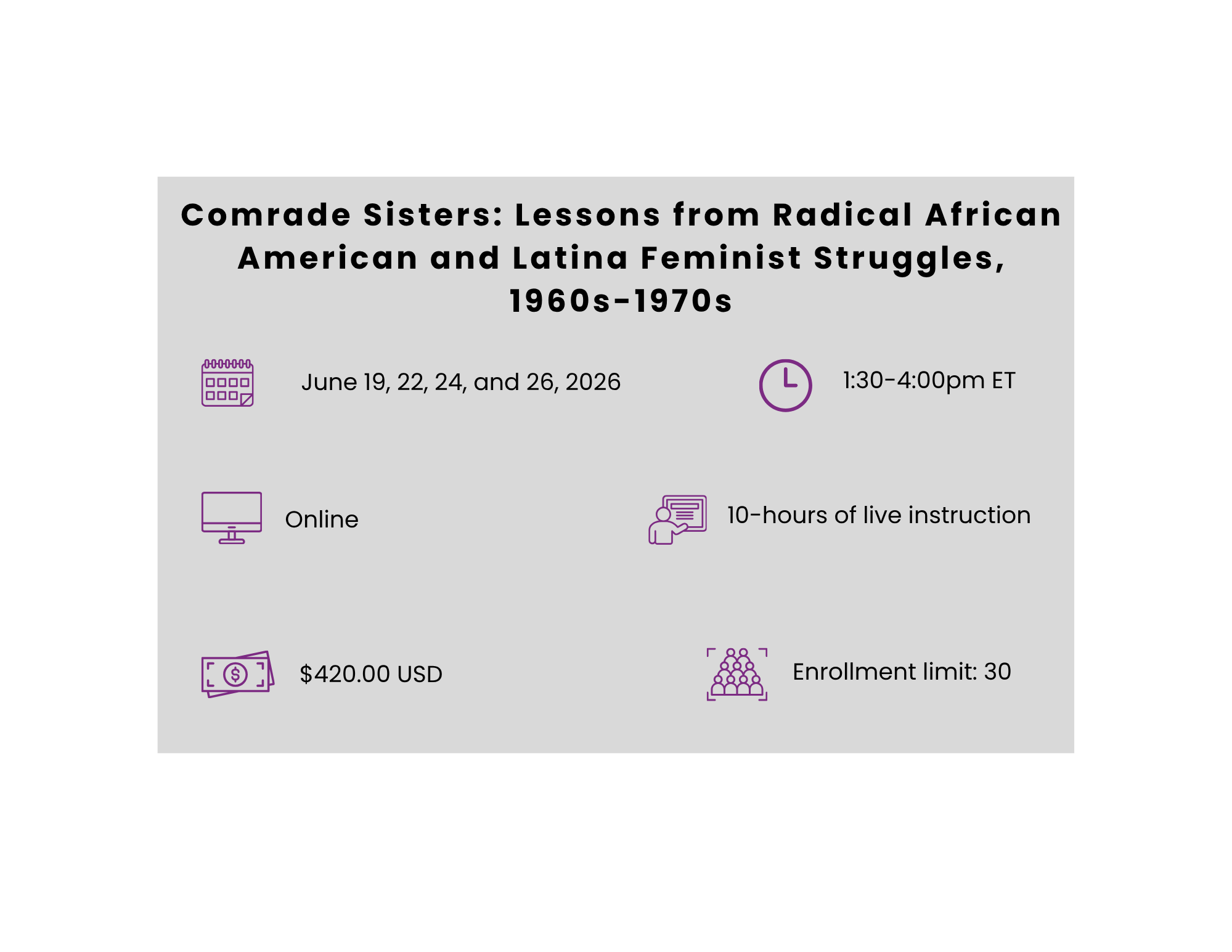
Comrade Sisters: Lessons from Radical African American and Latina Feminist Struggles, 1960s-1970s
$420.00
Session dates: June 19, 22, 24, and 26, 2026
Overview
This micro-course explores the powerful and often overlooked roles that African American and Latina women played in the radical social movements of the 1960s and 1970s, and why their work still matters today. Focusing on groups like the Black Panther Party, the Young Lords, and the Brown Berets, we will examine how women organized and led within militant nationalist movements while also advancing bold feminist critiques from within. Centering their voices and lived experiences, the course shows how they challenged sexism, confronted internal tensions, and reshaped what liberation could look like in practice. Participants will engage with compelling primary and secondary source materials including activist writings, newspapers, and oral histories that bring these histories to life. We connect these struggles directly to the present, drawing lessons for grassroots organizing and offering practical tools and strategies you can use to take action in your own community. Together, we will reflect on how this history can sharpen our approach to organizing and supporting more effective, community-rooted feminist action and resistance.
What You Will Learn
By the end of this micro-course, students will be able to:
Evaluate the gender politics of nationalist organizations such as the Black Panther Party, Young Lords Party, and Brown Berets, with attention to how women contested patriarchy and reshaped political agendas and leadership.
Assess the influence of Marxist, anticolonial, and Third Worldist traditions on feminist nationalist ideologies, including how activists redefined concepts of womanhood, motherhood, and solidarity.
Apply course frameworks and analytical tools to move from theory to praxis by translating historical and theoretical insights into actionable strategies that inspire meaningful change in both institutional settings and grassroots activism.
Meet the Faculty
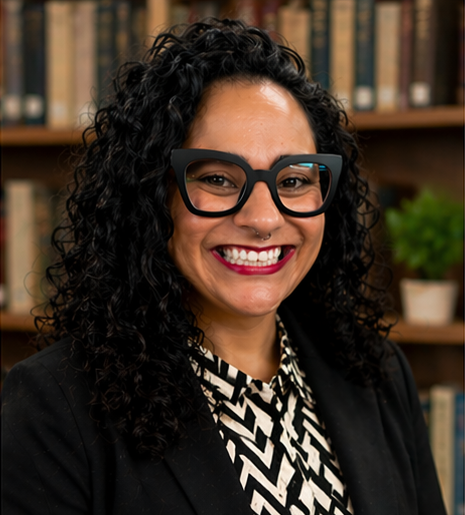
Tatiana M.F. Cruz
Dr. Tatiana M.F. Cruz (she/her) is the Hazel Dick Leonard Endowed Chair, Department Chair, and Associate Professor of Race, Gender, and Sexuality Studies at Simmons University. She also consults on issues of racial justice in higher education. She is the author of Deep North Uprising: African American and Latinx Politics and Protest in Boston (forthcoming) and has published in venues including the Journal of Urban History, the New England Quarterly, and edited volumes such as Black Movement: African American Urban History Since the Great Migration.
Her research focuses on African American and Latinx social movements during the long civil rights era, and her scholarly expertise spans African American history, Race/Ethnic Studies, Gender Studies, Urban Studies, and oral history. She is the founder and director of the Simmons Black Oral History Project. Her newest research project examines the history of Black student activism and campus movements to establish Black Studies programs at historically women’s colleges in the Northeast during the height of the Black Power era.
Dr. Cruz is committed to publicly engaged scholarship and the scholarship of teaching and learning. She has developed curriculum and regularly leads professional development workshops for K–12 teachers and school administrators on local history; Critical Race and Ethnic Studies histories, principles, and pedagogies; and culturally responsive teaching practices.
A Costa Rican Boston native, scholar-activist, and mother of three, Dr. Cruz lives in Dorchester. She earned her B.A. from Williams College and her M.A. and Ph.D. from the University of Michigan.
Simmons University