
Global Anti-fascist Feminisms
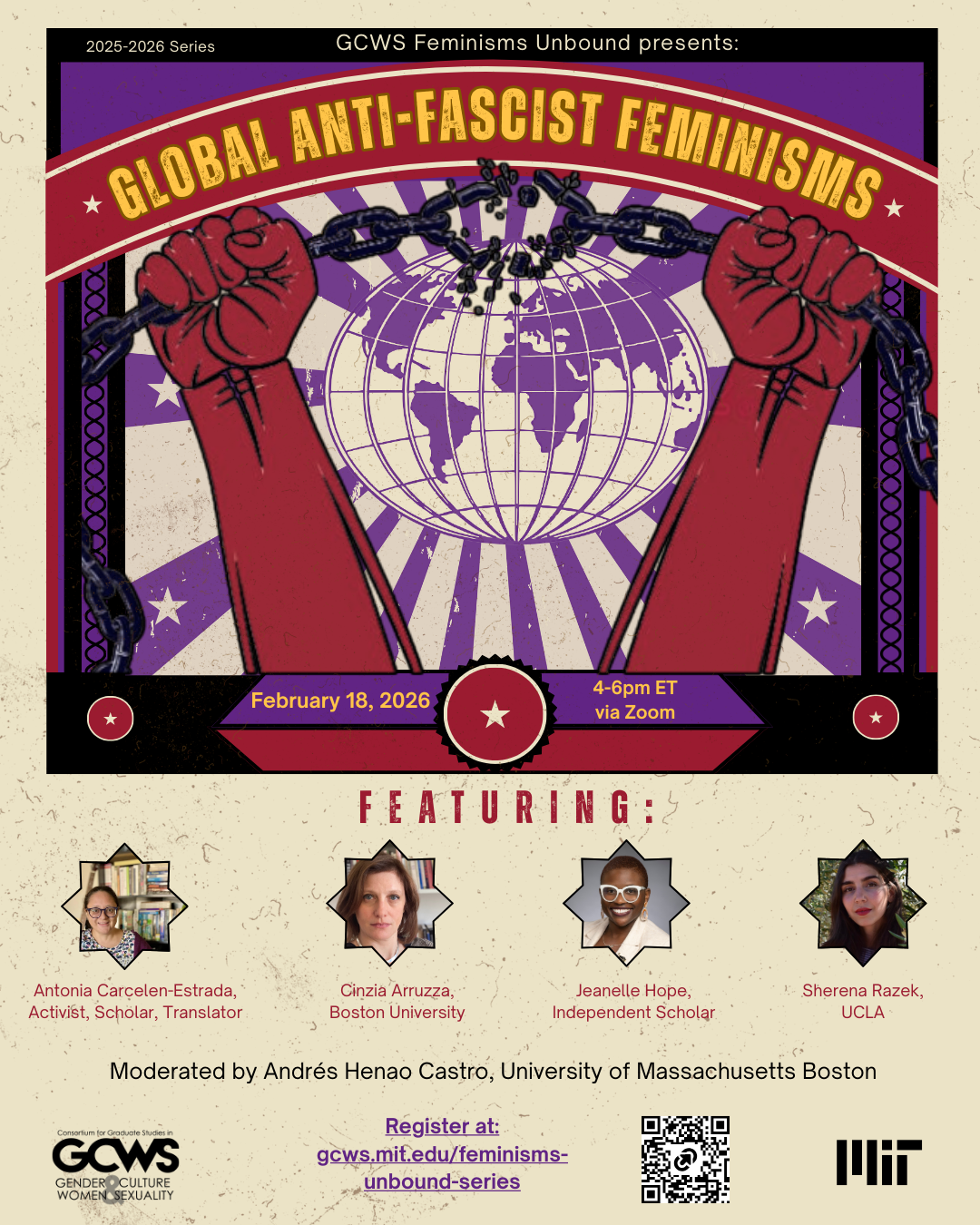
Our kickoff panel for the outstanding Feminisms Unbound panel series is on the subject of “Global Anti-Fascist Feminisms”. The panel is designed to share organizing strategies and feminist practices across the globe, that have emerged to resist the resurgence and intensification of global authoritarianism today and to build more democratic and liberatory worlds.
Some of the questions that we expect to address in this series are: How are today’s authoritarian regimes historically linked to previous ones? What is new about them? How has this global authoritarian trend changed feminist organizing? What resources can feminist thought, organizing, and activism offer us to confront the current authoritarian hegemony at the global, but also at the local level? What shape does fascism take in the context in which you are most actively engaged as a feminist thinker? What are the main challenges that you, and your communities, face as feminist organizers against authoritarian rules in your context?
Panelists:

Antonia Carcelen-Estrada, Ph.D
Activist, Scholar, Translator
Antonia Carcelen-Estrada’ s work as intercultural translator addresses linguistic, cultural, and economic relations in the Amazon (“Covert and Overt Ideologies” 2010), the Andes (What Does the Sumak Kawsay Mean” 2016) and the Black Pacific, the latter project funded by the British Academy from the Global Challenge Research Fund (2020-2023) (“Oral Histories in the Black Pacific” 2022). These publications examine how Incan subjects use translation in their interventions against colonial law, revealing a complex coloniality of gender, the aesthetic resistance of nations without states, how issues of race and gender affect people’s interaction with the law, and on the legacy of colonial policies on Latina migrant women (“Inscrito en mi piel” 2014). Other contributions to literary translation combine critical geography with intercultural translation and feature strategies, methods, and historical contextualization in translating Don Quijote into Kichwa (“Rewriting Memory” 2012), Mayan stories of resistance (Zapatista Stories for Dreaming An-Other World 2022), or feminist queer decolonial feminisms (Hilando Fino 2015). Carcelen-Estrada is currently immersed in global indigeneity and transnational feminisms projects as black and indigenous decolonial methodologies become increasingly vital for the resistance against fascist states.
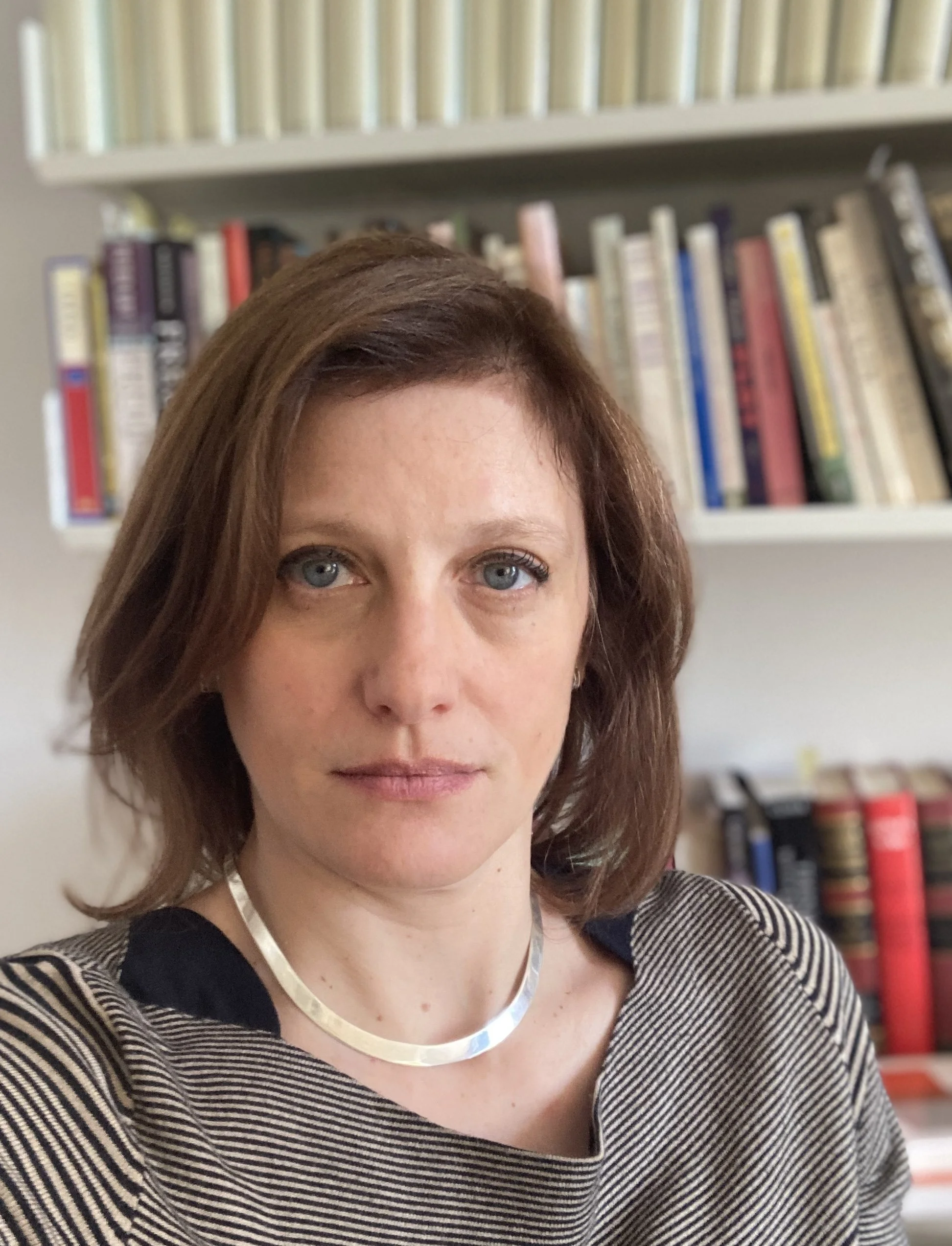
Cinzia Arruzza
Professor of Greek Philosophy at Boston University
Cinzia Arruzza is Maria Stata Professor of Classical Greek Studies and Professor of Philosophy at Boston University. She has authored books in the history of ancient philosophy (A Wolf in the City. Tyranny and the Tyrant in Plato’s Republic, OUP 2018; Plotinus. Ennead II 5. On What is Potentially and What Actually, Parmenides Press 2015) and in feminist theory (with Tithi Bhattacharya and Nancy Fraser, Feminism for the 99%. A Manifesto, Verso, 2019; with Lidia Cirillo, Storia delle storie del femminismo, Edizioni Alegre 2017; Dangerous Liaisons, Marriages and Divorces of Marxism and Feminism, The Merlin Press 2013).
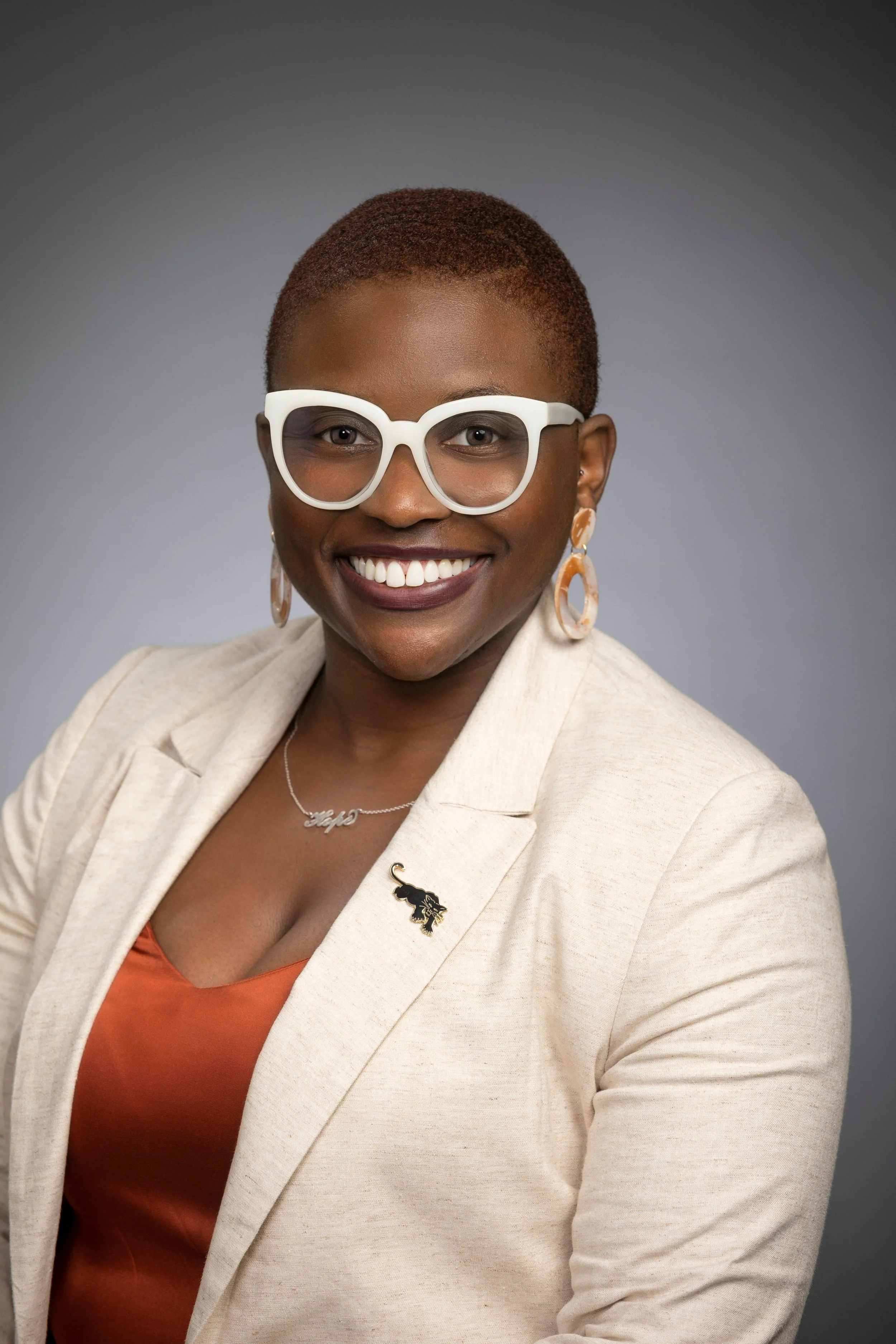
Jeanelle Hope, Ph.D
Independent Scholar
Jeanelle K. Hope is is a native of Oakland, California. She is an independent scholar of Black political thought, culture and social movements. Dr. Hope is the co-author of The Black Antifascist Tradition: Fighting Back from Anti-Lynching to Abolition. Her research has been published in several academic journals including The American Studies Journal, Amerasia, Studies in Political Economy, and Black Camera, and her public scholarship has been featured in Essence and the African American Policy Forum.
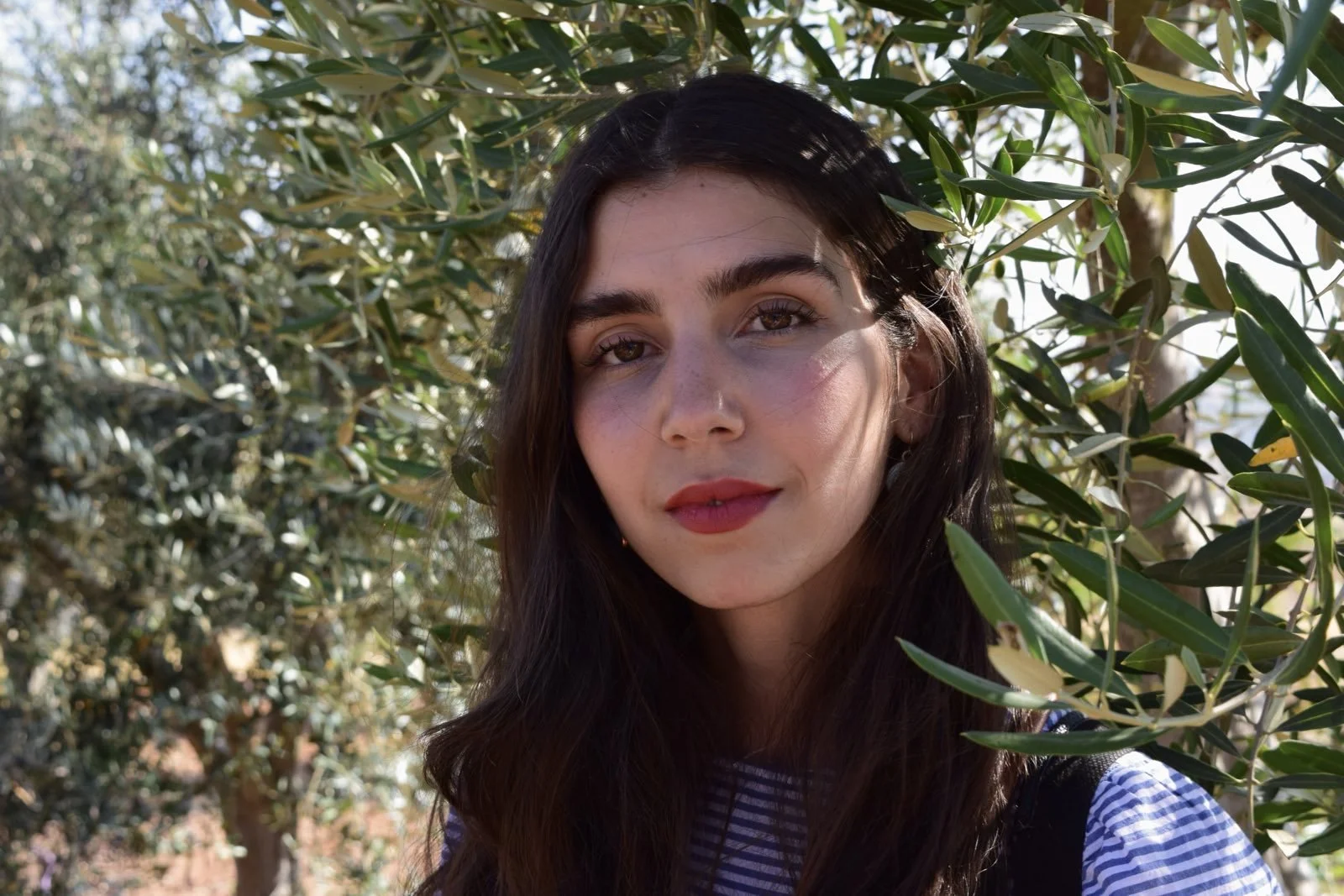
Sherena Razek, Ph.D
President’s and Andrew W. Mellon Postdoctoral Fellow in the Department of Gender Studies at UCLA
Sherena Razek is a diasporic Palestinian feminist educator, scholar, activist, and labor organizer. Currently, she is a President’s and Andrew W. Mellon Postdoctoral Fellow in the Department of Gender Studies at the University of California Los Angeles. She holds a PhD from the Department of Modern Culture and Media at Brown University where she was the President of the Graduate Labor Organization and co-founder of the Palestine Solidarity Caucus. She will begin as Assistant Professor in Women’s, Gender, and Sexuality Studies at UMass Boston this coming fall. Her research focuses on Palestinian visual culture, anti-imperialist struggle, and decolonial feminist ecologies. Her first book project is currently titled “Nakba Ecologies: On Elemental Intifada in Colonized Palestine.” It offers a grounded intervention in the emergent field of elemental media studies, by tethering the classical elements of water, fire, earth and air to their specific valences in Palestinian film, photography, performance, ecopoetics, and counter archives. She received the 2025 Malcolm H. Kerr dissertation award from the Middle East Studies Association for the dissertation upon which the book manuscript is based. Her curatorial work has addressed the politics and aesthetics of surveillance, oceanic degradation, and the militarization and materialization of nation-state borders between the Global North and the Global South. Her writing appears in The Journal of Palestine Studies, InVisible Culture, and Social Text.
Moderated by Andrés Henao Castro of the University of Massachusetts Boston