
Beauty and Ugliness
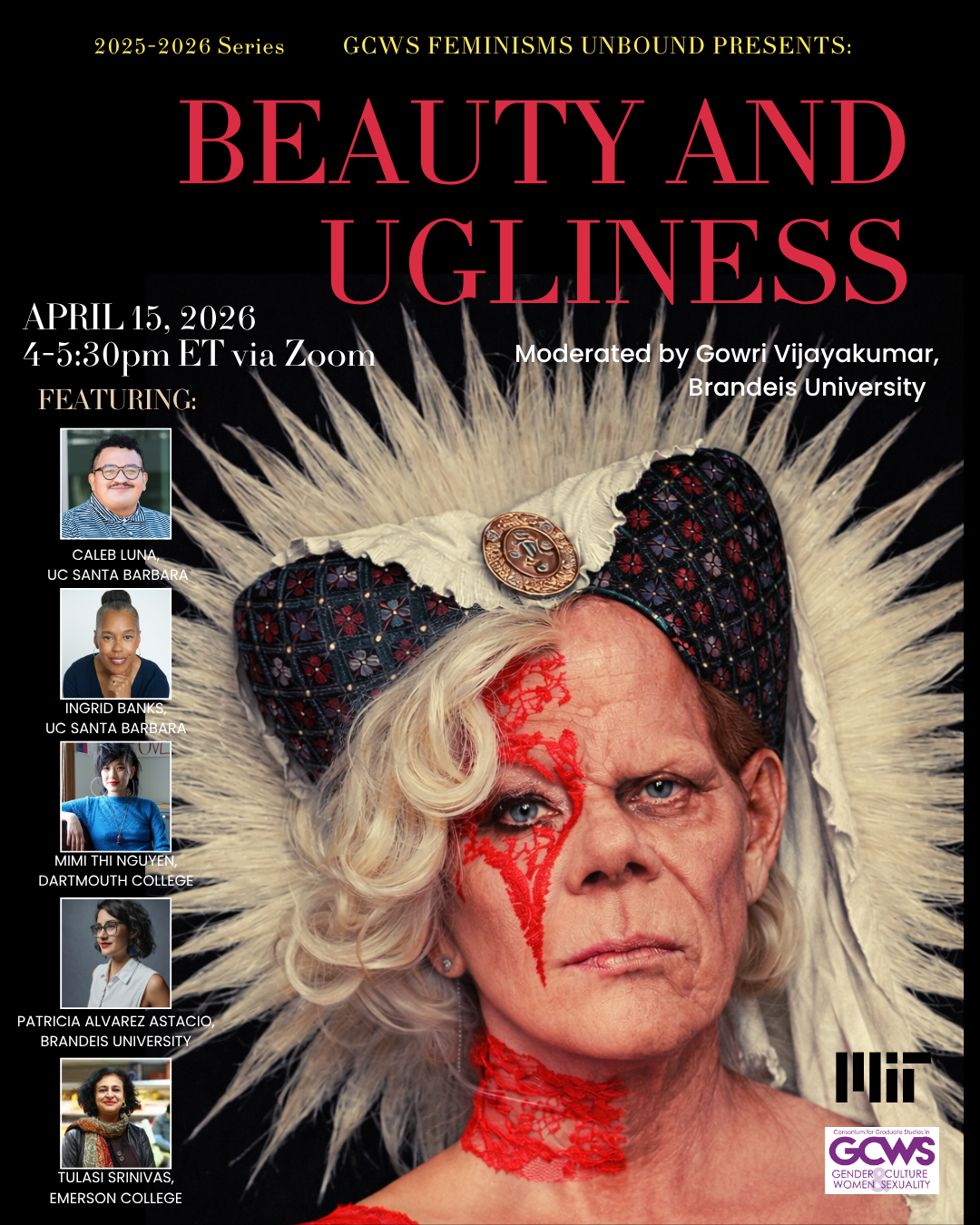
On April 15, we wrap up our Feminisms Unbound season with a vital conversation: How do beauty and ugliness function as tools of power, settler-colonial logic, and even resistance?
Is beauty the enemy of feminism? Feminists have examined the political economy of beauty; the ways beauty is commodified in gendered regimes of accumulation; the ways beauty furthers ethnonationalist, settler colonial, and imperialist projects; the embodied practice of creating and sustaining beauty; and the functions of beauty as a political concept, or tool of theorizing crisis conditions. Feminist theorists have also engaged ugliness as a settler colonial logic, a spatial imaginary, a tactic of othering, or even a radical ethic of liberation. This panel examines ways of exploring beauty and ugliness through feminist and queer theory, art, and activism, and considers the ways beauty and ugliness can form a bridge to conceptualizing a more just world.
Panelists:
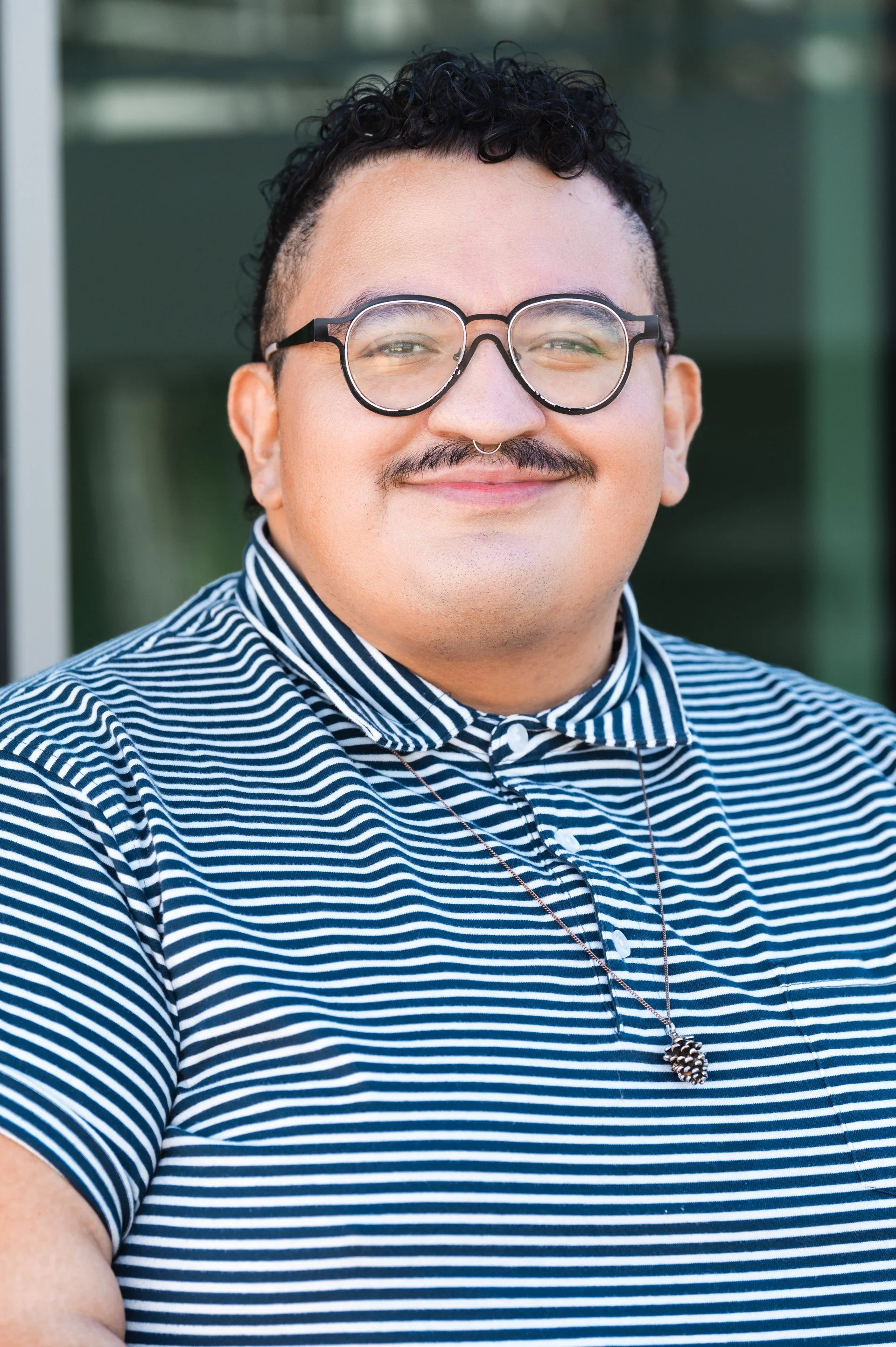
Caleb Luna
Assistant Professor of Feminist Studies Studies at UC Santa Barbara
Caleb Luna (they/them) holds a Ph.D. in Performance Studies with a Designated Emphasis in Gender and Women’s Studies from the University of California, Berkeley. Their teaching, writing and research merges fat studies and queer of color critique with media and performance studies. They are an award-winning educator and scholar, the bestselling author of REVENGE BODY (Nomadic Press, 2022; Black Lawrence Press, 2023), and co-host of the podcast Unsolicited: Fatties Talk Back. Their writing can be found in the anthologies Queer Nightlife, Fat & Queer and Weight & Wisdom, as well as the journals Fat Studies, Excessive Bodies and Performance Matters, CanadianArt magazine and more. They are a former UC President’s and Mellon Foundation Postdoctoral Fellow and currently an Assistant Professor of Feminist Studies and Director of the LGBTQ Studies minor at the University of California, Santa Barbara.
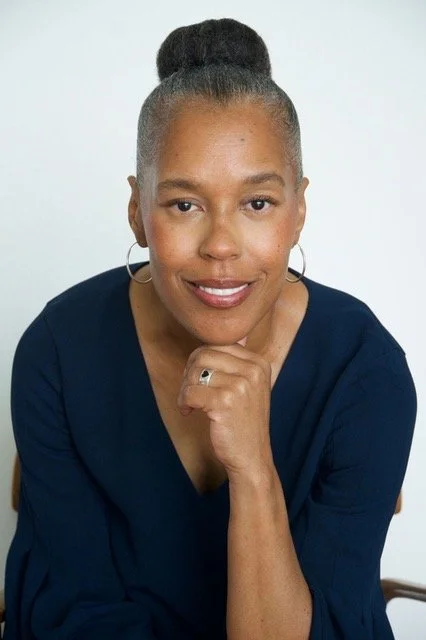
Ingrid Banks
Associate Professor of Black Studies at UC Santa Barbara
Ingrid Banks is Associate Professor in the Department of Black Studies and an affiliate faculty member in the Department of Feminist Studies at the University of California, Santa Barbara. She is the author of Hair Matters: Beauty, Power, and Black Women's Consciousness (New York University Press, 2000). Dr. Banks has published articles and book chapters in the following: Blackberries and Redbones: Critical Articulations of Black Hair/Body Politics in Africana Communities; Black Renaissance/Renaissance Noire; Feminist Frontiers (Eleventh Edition); Feminist Teacher; Journal of Women’s History; Journal of Family Theory & Review; and Textures: The History and Art of Black Hair. Her commentary has appeared in a number of media outlets, including The New York Times, New York Newsday, Chronicle of Higher Education, Air America, the BBC, The Guardian (London), The Root.com, CNN.com, and Black Agenda Report, to name a few. Dr. Banks is currently completing her forthcoming book, Protective Style, that examines contemporary black beauty salon culture and more.

Mimi Thi Nguyen
Professor of Women’s Gender, and Sexuality Studies at Dartmouth College
Mimi Thi Nguyen is Professor of Women's, Gender, and Sexuality Studies at Dartmouth College. Her first book, called The Gift of Freedom: War, Debt, and Other Refugee Passages, focuses on the promise of “giving” freedom concurrent and contingent with waging war (Duke University Press, 2012). Her second book is called The Promise of Beauty, which considers beauty as a fruitful concept through which we engage narratives of crisis (Duke University Press, 2024). She is coeditor of several collections about Asian/American popular culture and cultural studies.and has published in Signs, Camera Obscura, The Funambulist, Women & Performance, positions, Radical History Review, and ArtForum. Her papers have been solicited for the Feminist Theory Archive at Brown University.
Nguyen has made zines since 1991, including Slander (formerly known by other titles) and the compilation zine Race Riot. She is a former Punk Planet columnist and Maximumrocknroll volunteer. Nguyen is working on a collection of columns and essays.

Patricia Alvarez Astacio
Assistant Professor of Anthropology at Brandeis University
Filmmaker and anthropologist whose work unfolds at the intersection of documentary arts and ethnography to explore issues of political ecology, capitalism, human, non-human and more-than-human relationships and visual culture in Latinx, Latin American and Caribbean communities. Her forthcoming book, Moral Fibers: Ethical Fashion and the Textures of Indigeneity in Peru, critically explores the Peruvian alpaca wool supply chain for ethical and sustainable fashions analyzing how, through the intervention of development projects, indigenous women artisans and their aesthetic traditions are interpolated into “ethical fashion.” Her film, Entretejido, which premiered at the Havana International Film Festival, is an observational portrait of the supply chain of alpaca wool garments for ethical and sustainable fashions. Centering the materiality of wool, Entretejido offers an immersive experience of the textures that constitute this supply chain from animal to runway to explore how objects we consume are entangled in racial politics that cut across human and non-human worlds. She produced the documentary feature, Backside, which premiered at Tribeca, an observational-sensorial film that follows the Latinx migrant grooms that care for the thoroughbred horses at Churchill Downs, home of the Kentucky Derby. Through an exploration of the relationship between grooms and horses, Backside reveals how race, labor, and class shape the horse racing industry in the US. She is currently in development for a feature on the cochineal pigment industry that is rapidly expanding and industrializing in Peru. Touted as environmentally friendly and sustainable, this industry builds upon the knolwedge and labor of Indigenous communities for whom cochineal is central to their cultural traditions. The film will explore how this industrial ressurgence of cochineal brings forth echoes of its colonial past.

Tulasi Srinivas
Professor of Anthropology, Religion, and Transnational Studies at Emerson College
Tulasi Srinivas, Professor of Anthropology, Religion and Transnational Studies, Marlboro Institute, is a recognized scholar of religion and ecology with a focus on climate justice.
Tulasi Srinivas is Professor of Anthropology, Religion and Transnational Studies at The Marlboro Institute for Interdisciplinary Studies at Emerson College. Srinivas is a fellow of the Royal Asiatic Society and the Indian Sociological Society.
Srinivas research focuses on comparative ethics and Hinduism. Her books explore themes such as wonder, beauty and grace through ethnographic explorations and her recent work considers climate justice and religious ecology in a post colonial context through the story of water in her hometown of Bangalore, India.
Srinivas is an award-winning teacher, most recently the 2015 Helaine and Stanley Miller awardee for teaching excellence at Emerson College.
Moderated by Gowri Vijayakumar of Brandeis University